
Dr. Stephan Getzin | Scientist | Ecologist
Career in Namibia
Namibia is more than just a travel destination for me. It is a country that has accompanied me for many years, shaped me, and continues to fascinate me. When I came to Namibia, the country was still a very young nation, having only gained independence in 1990. It was a time of new beginnings, not only for the Namibian people, but also for me.
Studies, nature conservation, and practical experience
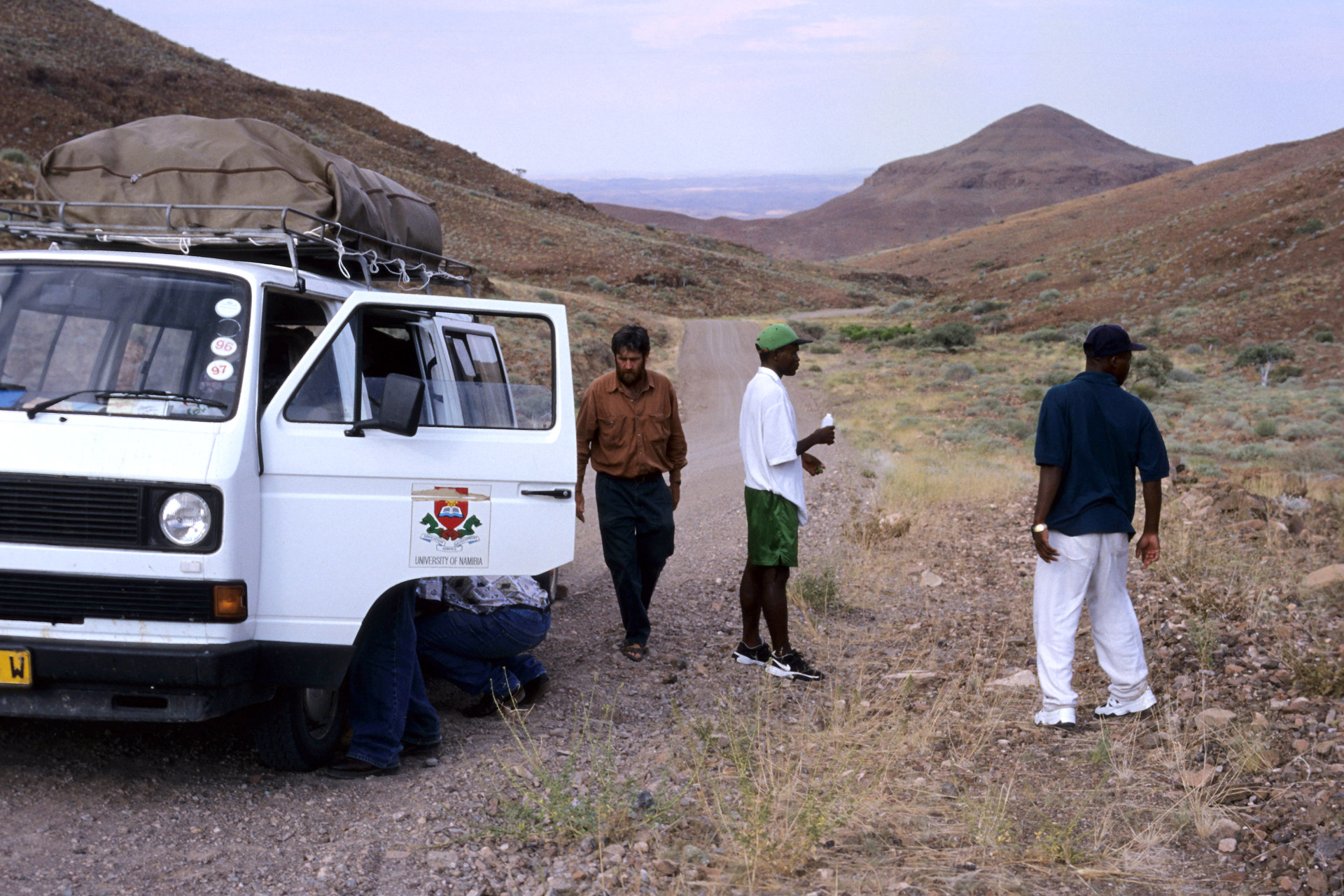 Between 1997 and 2000, I studied biology and geography at the University of Namibia, where I was the first German full-time student to graduate with a bachelor's degree. This period was formative for me, professionally as well as personally. Studying locally gave me an in-depth insight into Namibia's ecological, geographical, climatic, and social contexts and laid the foundation for my later research and guiding activities.
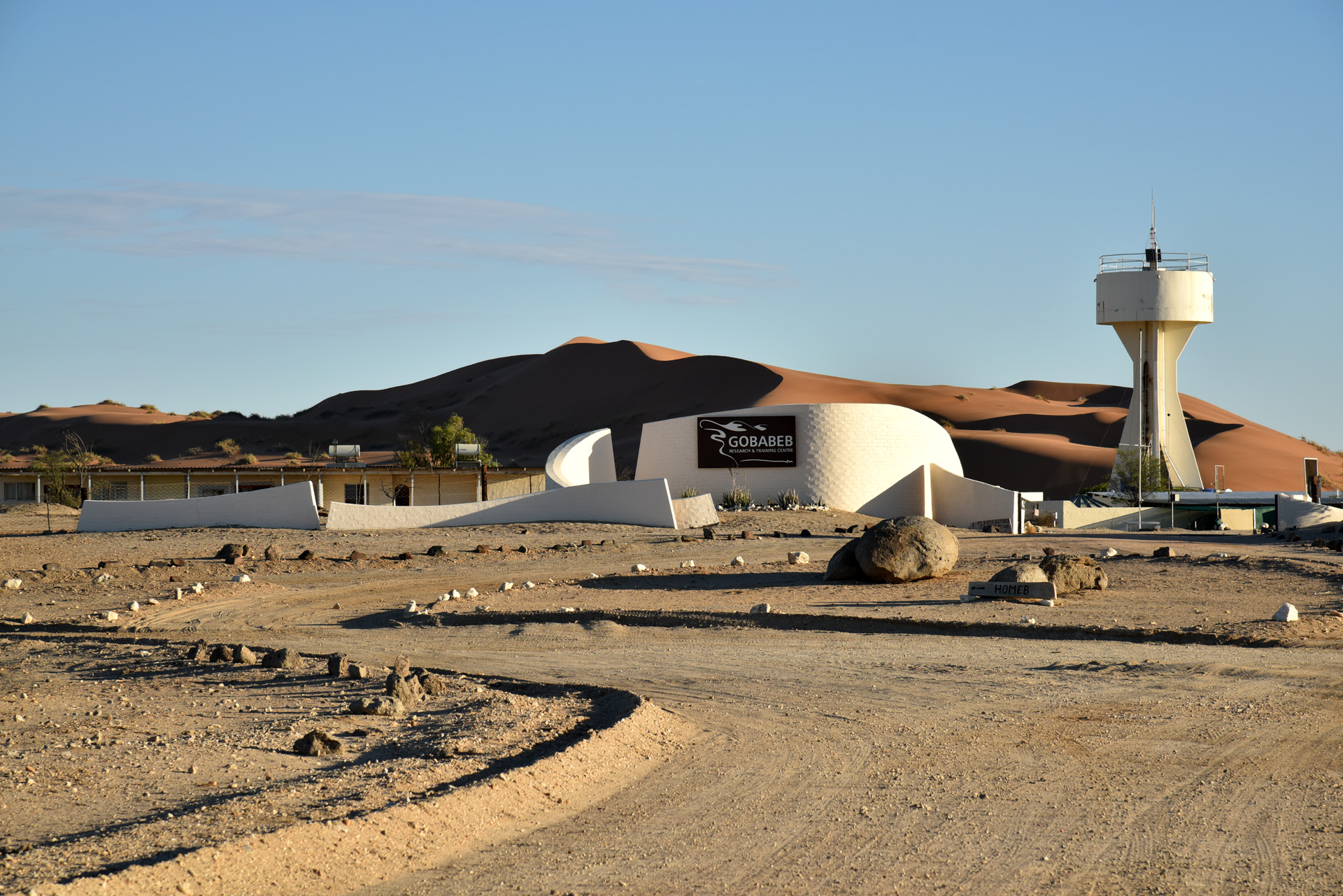
My first university field trips took me to the Namib in 1997 and to the Gobabeb Namib Research Institute in 1998, of which I am an associate member.
My bachelor's thesis dealt with how grazing by antelopes and zebras influences grass species in the Highland Savanna of Namibia.
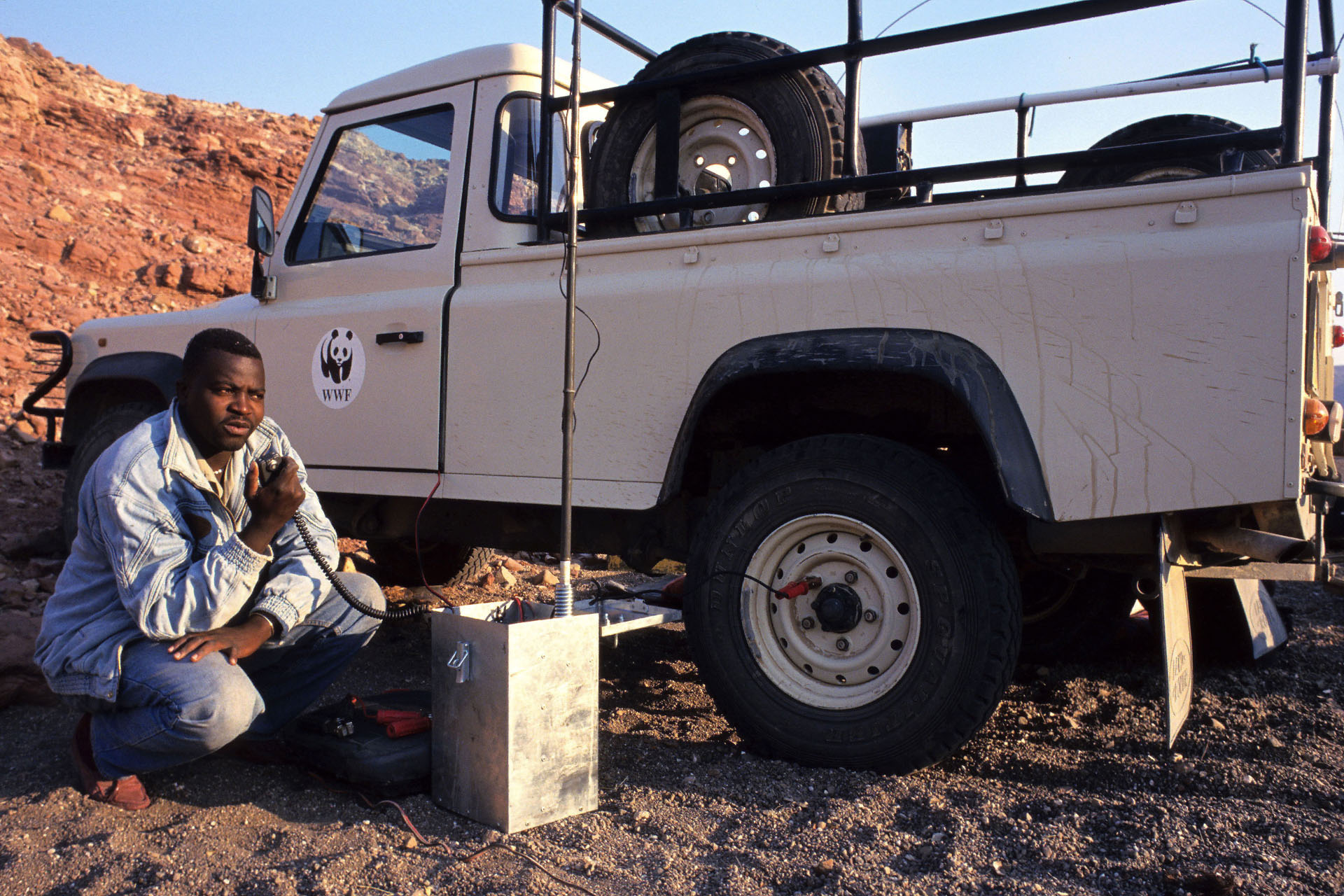
During this time, I was also involved in nature conservation in Namibia and worked on the Integrated Rural Development and Nature Conservation (IRDNC) pogram.
The aim of this project is to specifically protect wildlife outside of traditional national park boundaries. The IRDNC project and its founder, Garth Owen-Smith, won many of the highest environmental awards, such as the Goldman Environmental Prize for Africa or the UN’s Environmental Program Global 500 Award. It has become one of the most successful nature conservation projects on the African continent because it pursues a holistic approach in which the rural population is given back their old hunting rights and women are actively involved in the decision-making processes.
Between 1997 and 2000, I studied biology and geography at the University of Namibia, where I was the first German full-time student to graduate with a bachelor's degree. This period was formative for me, professionally as well as personally. Studying locally gave me an in-depth insight into Namibia's ecological, geographical, climatic, and social contexts and laid the foundation for my later research and guiding activities.
My first university field trips took me to the Namib in 1997 and to the Gobabeb Namib Research Institute in 1998, of which I am an associate member.
My bachelor's thesis dealt with how grazing by antelopes and zebras influences grass species in the Highland Savanna of Namibia.
During this time, I was also involved in nature conservation in Namibia and worked on the Integrated Rural Development and Nature Conservation (IRDNC) pogram.
The aim of this project is to specifically protect wildlife outside of traditional national park boundaries. The IRDNC project and its founder, Garth Owen-Smith, won many of the highest environmental awards, such as the Goldman Environmental Prize for Africa or the UN’s Environmental Program Global 500 Award. It has become one of the most successful nature conservation projects on the African continent because it pursues a holistic approach in which the rural population is given back their old hunting rights and women are actively involved in the decision-making processes.
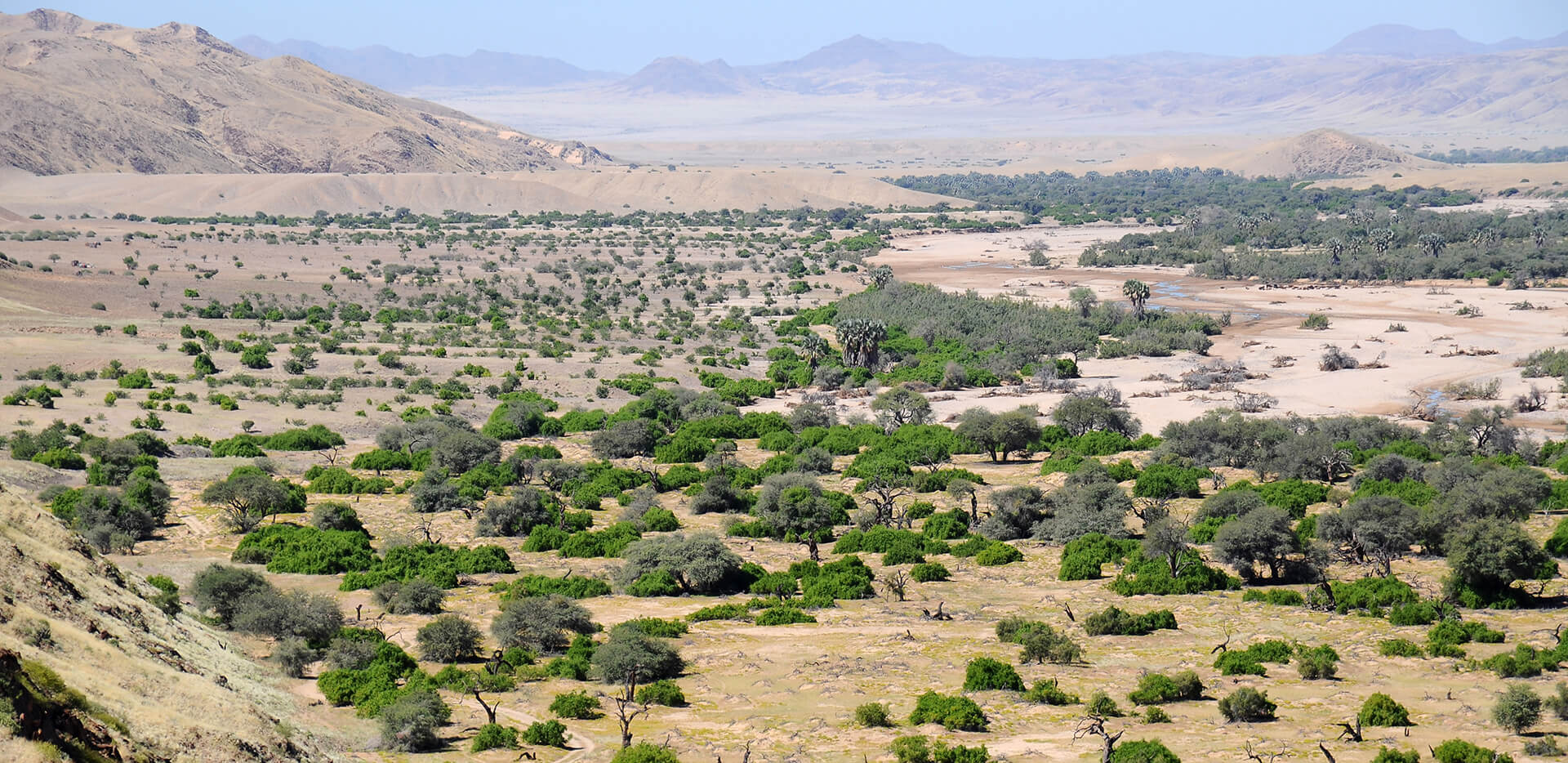
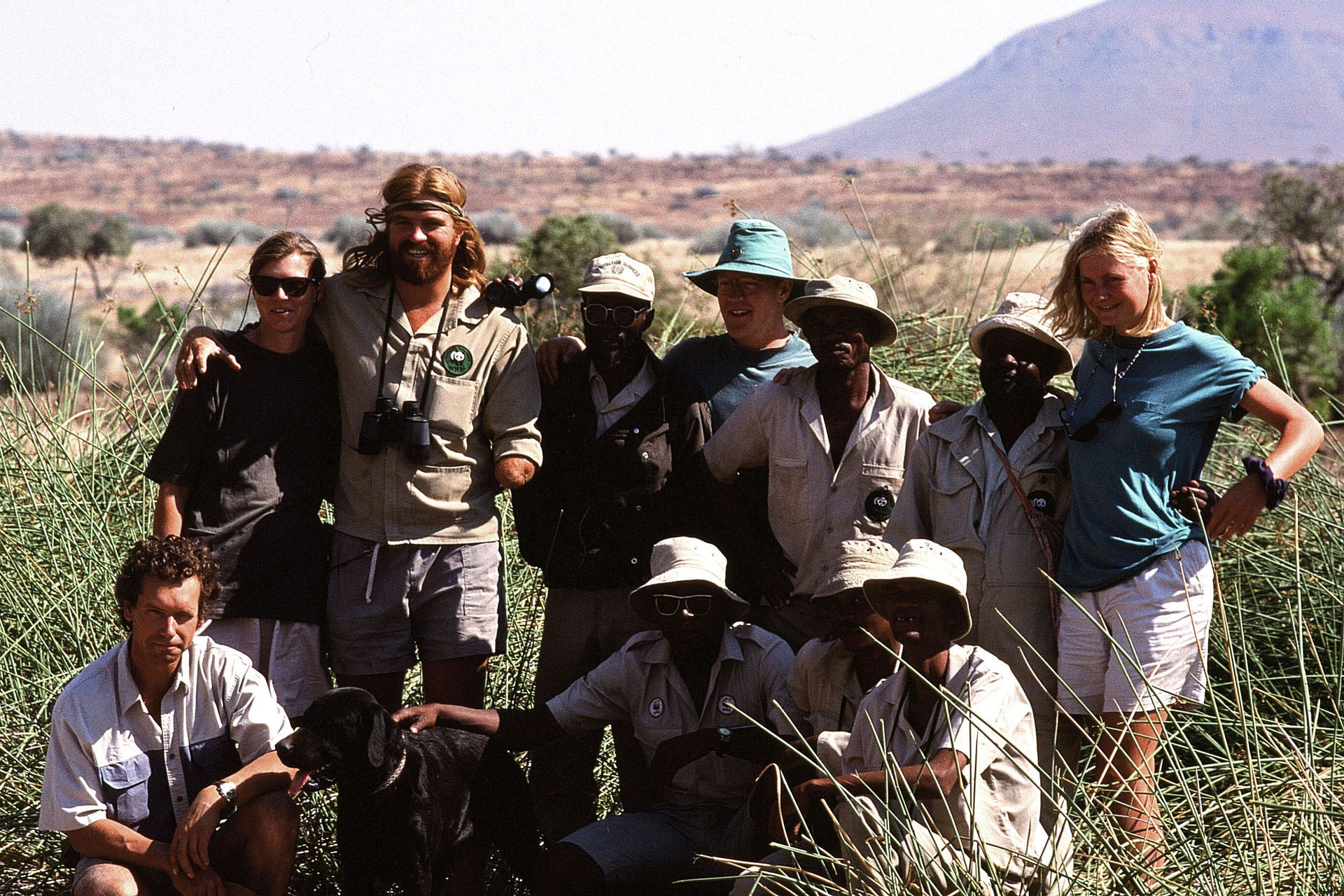
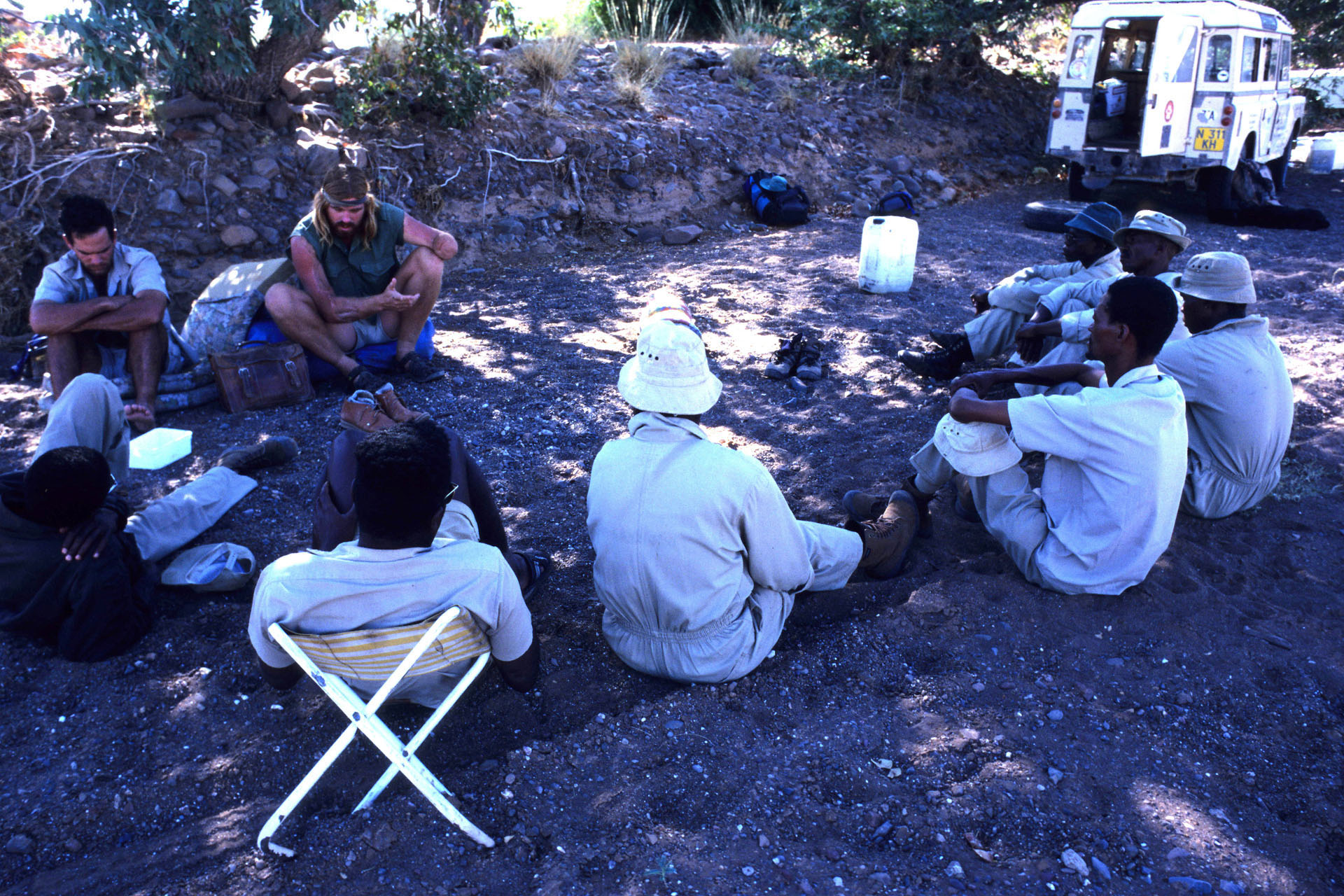
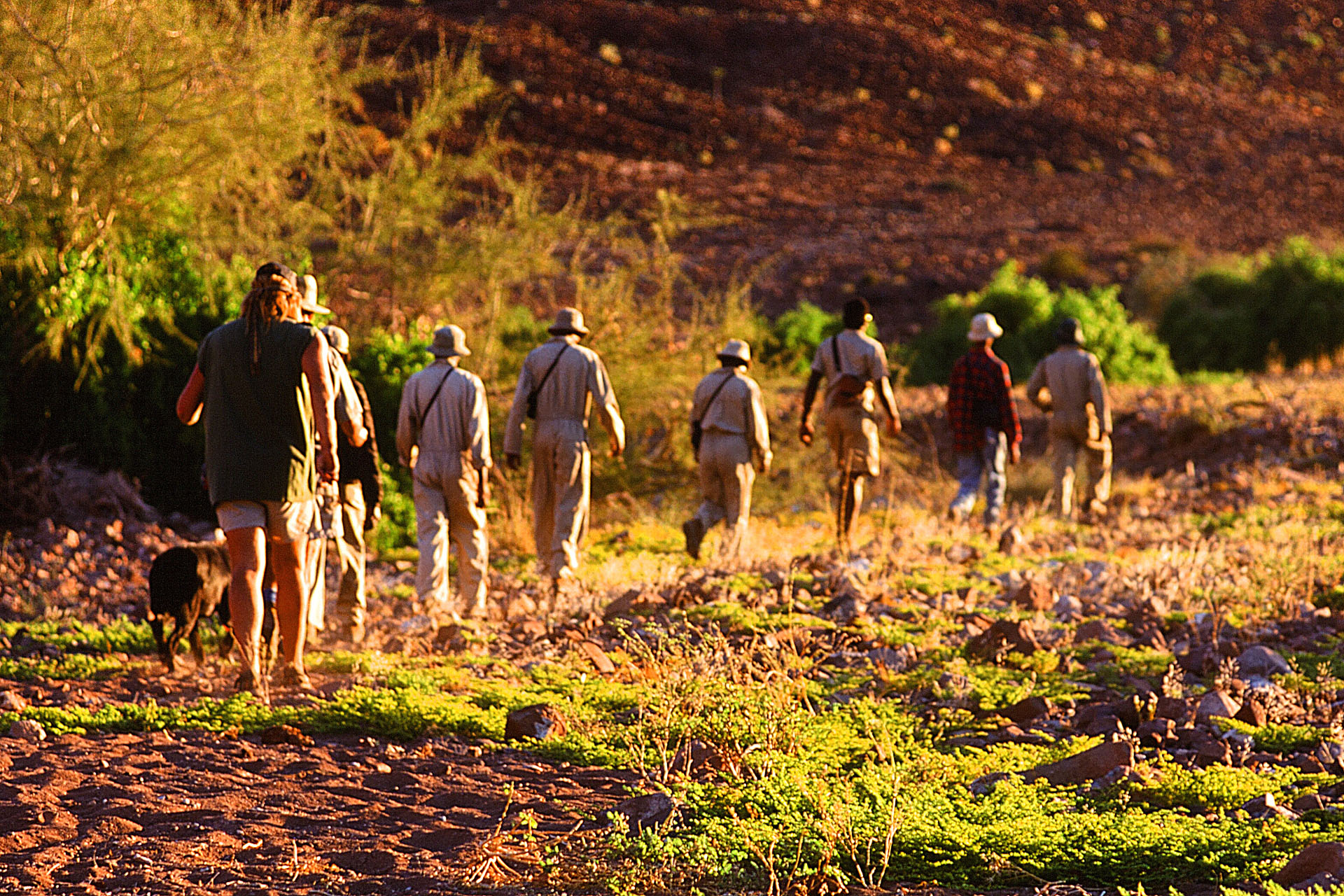
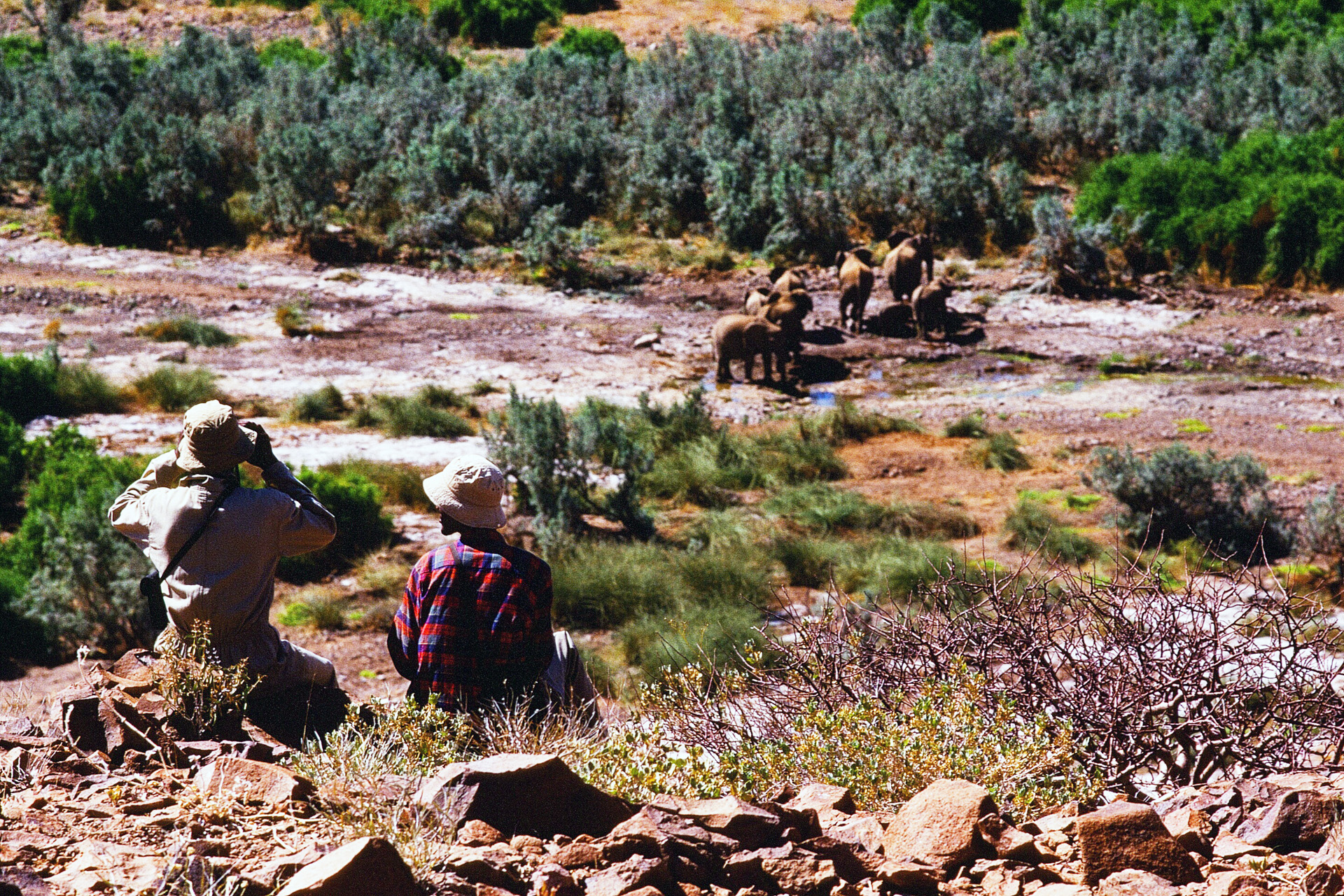
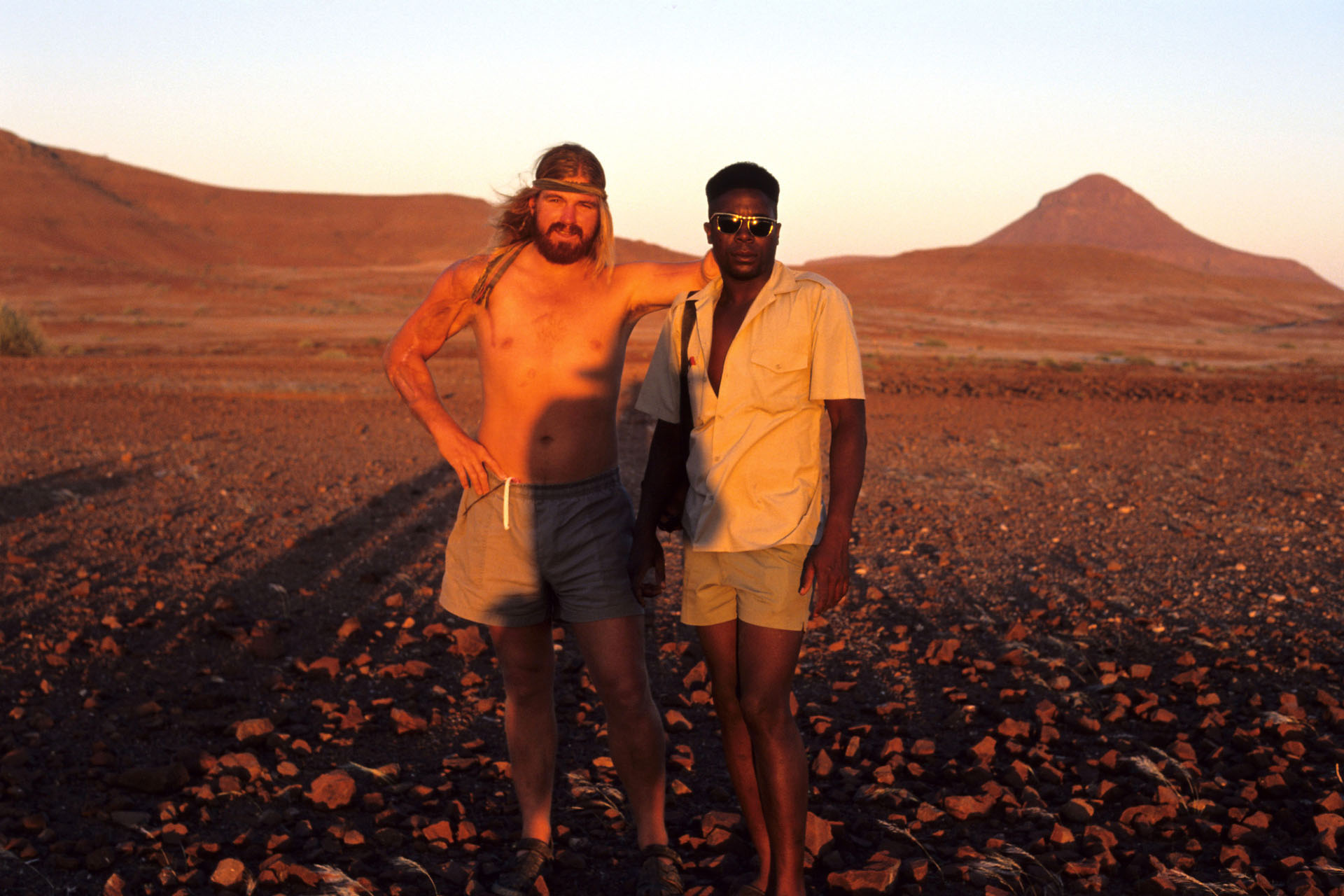
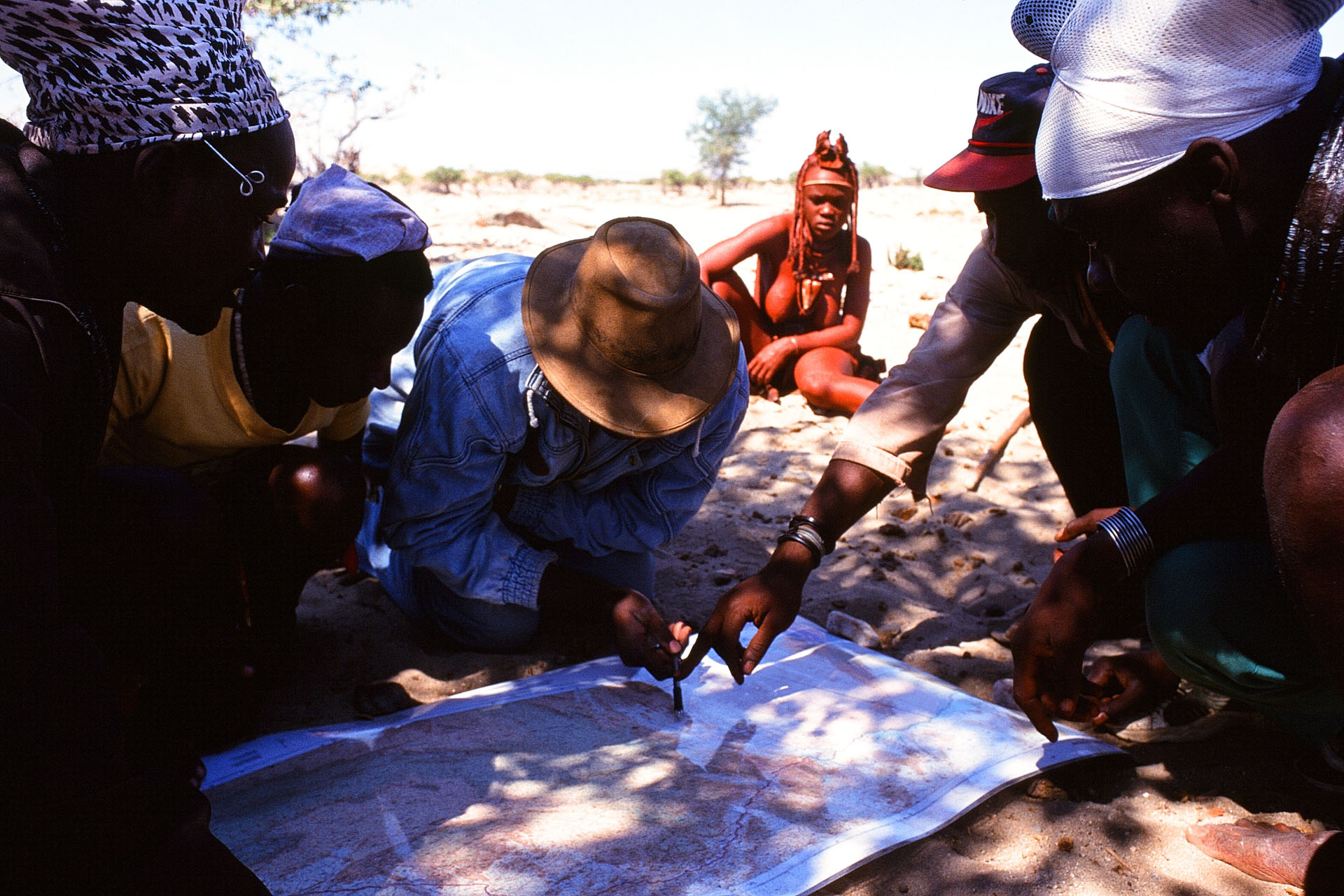
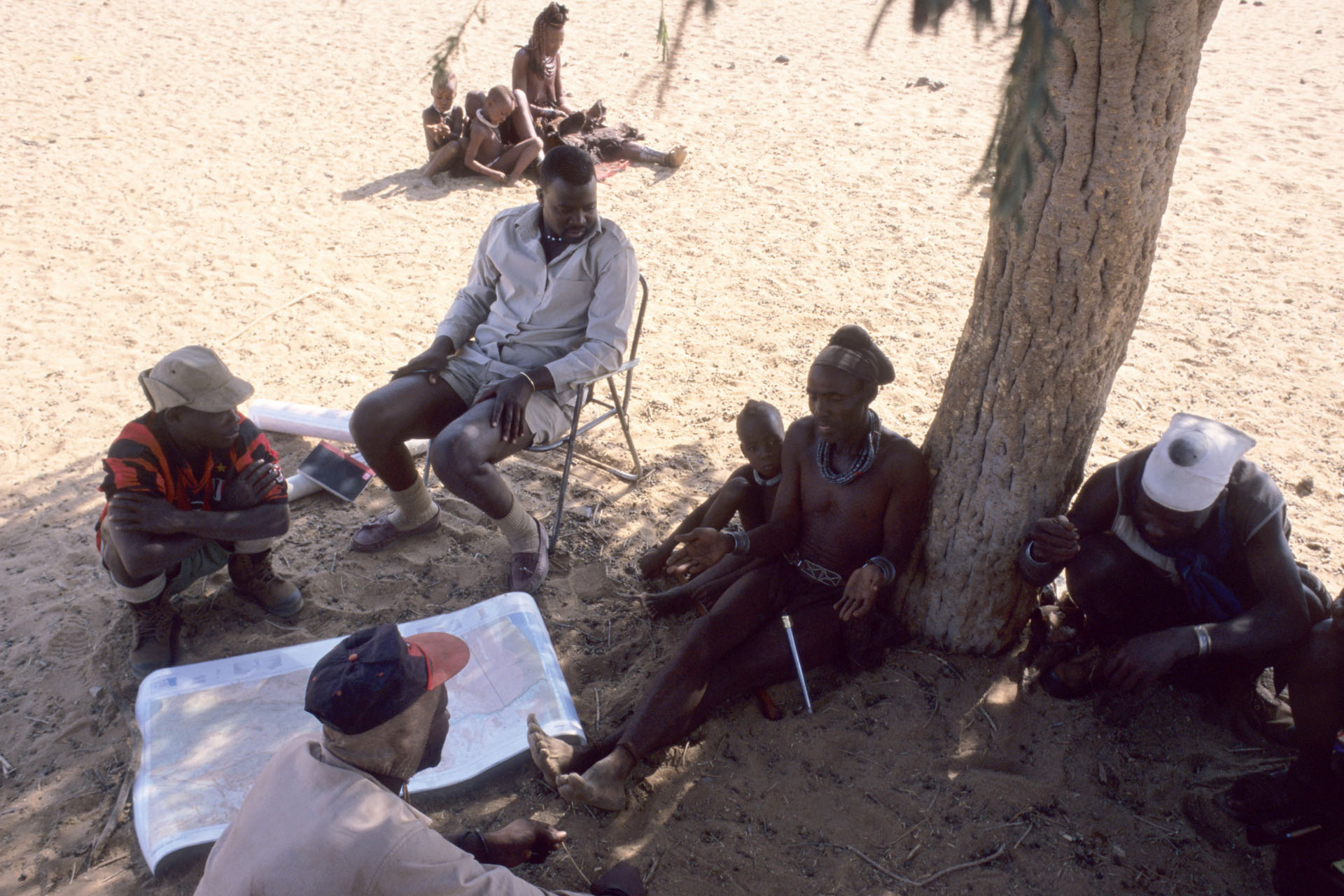
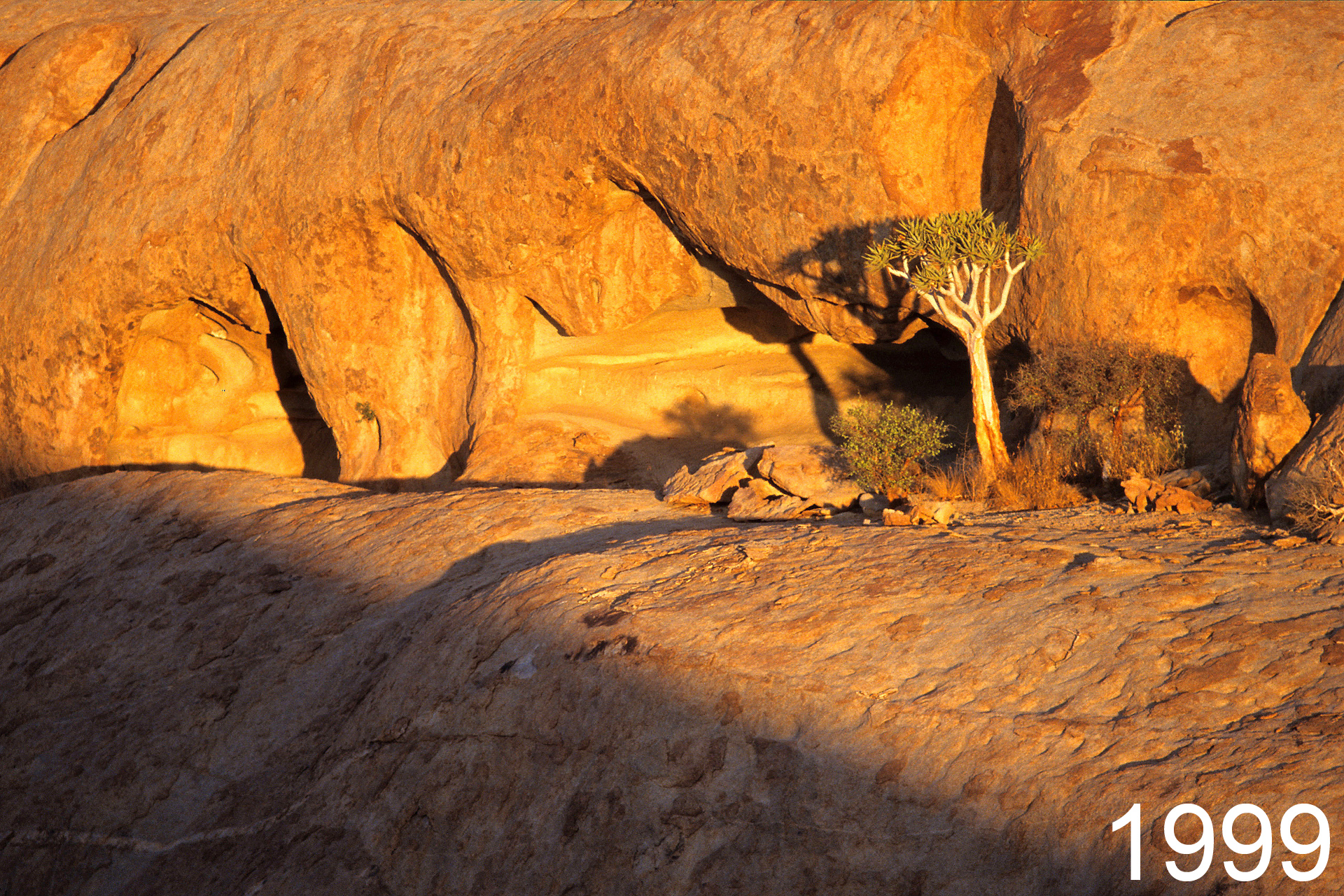
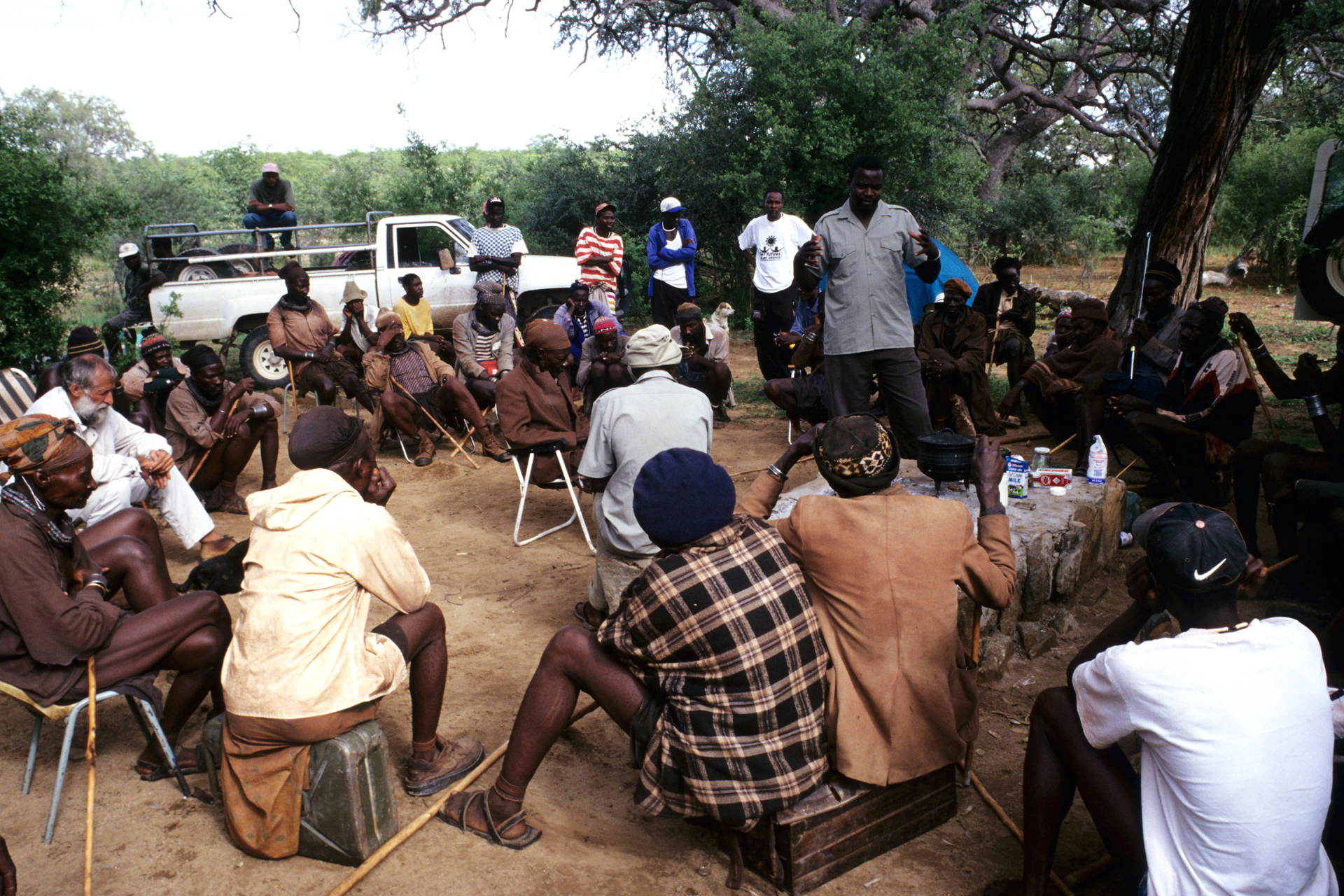 I accompanied John Kasaona – the current director of the project – on various tours to the Kaokoveld, where, for example, the border lines of the new conservancy in the Marienfluss or Hartmann’s Valley were negotiated with the local Himba chiefs. It was these tours within the framework of the IRDNC project in the remote north-west of Namibia that finally led me to the fairy circles in 1999.
Working with IRDNC gave me an early, practical understanding of how sustainable nature conservation works in Namibia: as an interplay between ecology, local communities, economic interests, and the political framework. These experiences, which I also wrote about in Namibia's Allgemeine Zeitung in 1999, continue to influence my view of landscapes, protected areas, and the role of tourism in the country to this day.
I accompanied John Kasaona – the current director of the project – on various tours to the Kaokoveld, where, for example, the border lines of the new conservancy in the Marienfluss or Hartmann’s Valley were negotiated with the local Himba chiefs. It was these tours within the framework of the IRDNC project in the remote north-west of Namibia that finally led me to the fairy circles in 1999.
Working with IRDNC gave me an early, practical understanding of how sustainable nature conservation works in Namibia: as an interplay between ecology, local communities, economic interests, and the political framework. These experiences, which I also wrote about in Namibia's Allgemeine Zeitung in 1999, continue to influence my view of landscapes, protected areas, and the role of tourism in the country to this day.
Research on the ecology of the Namib Desert
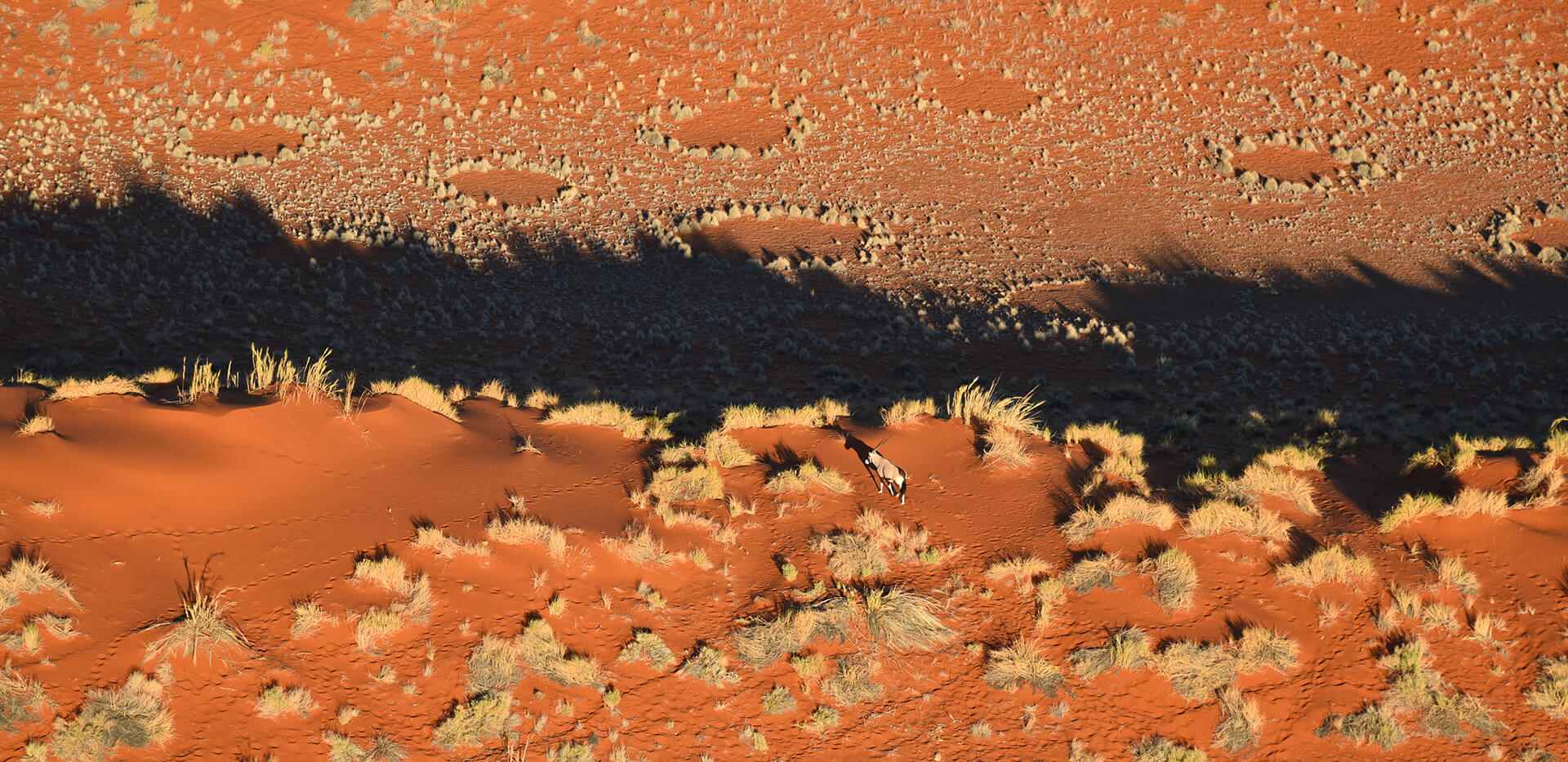
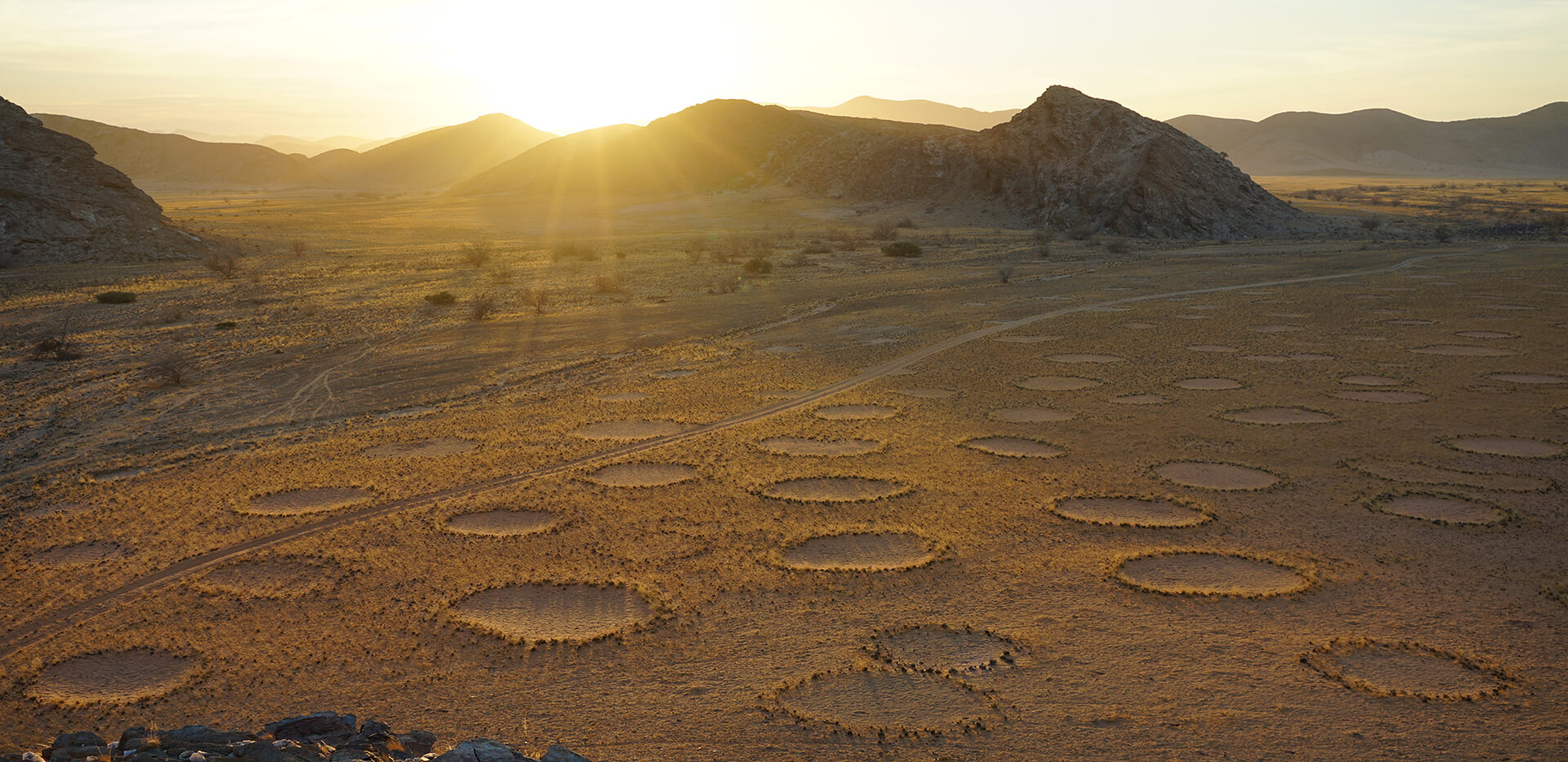
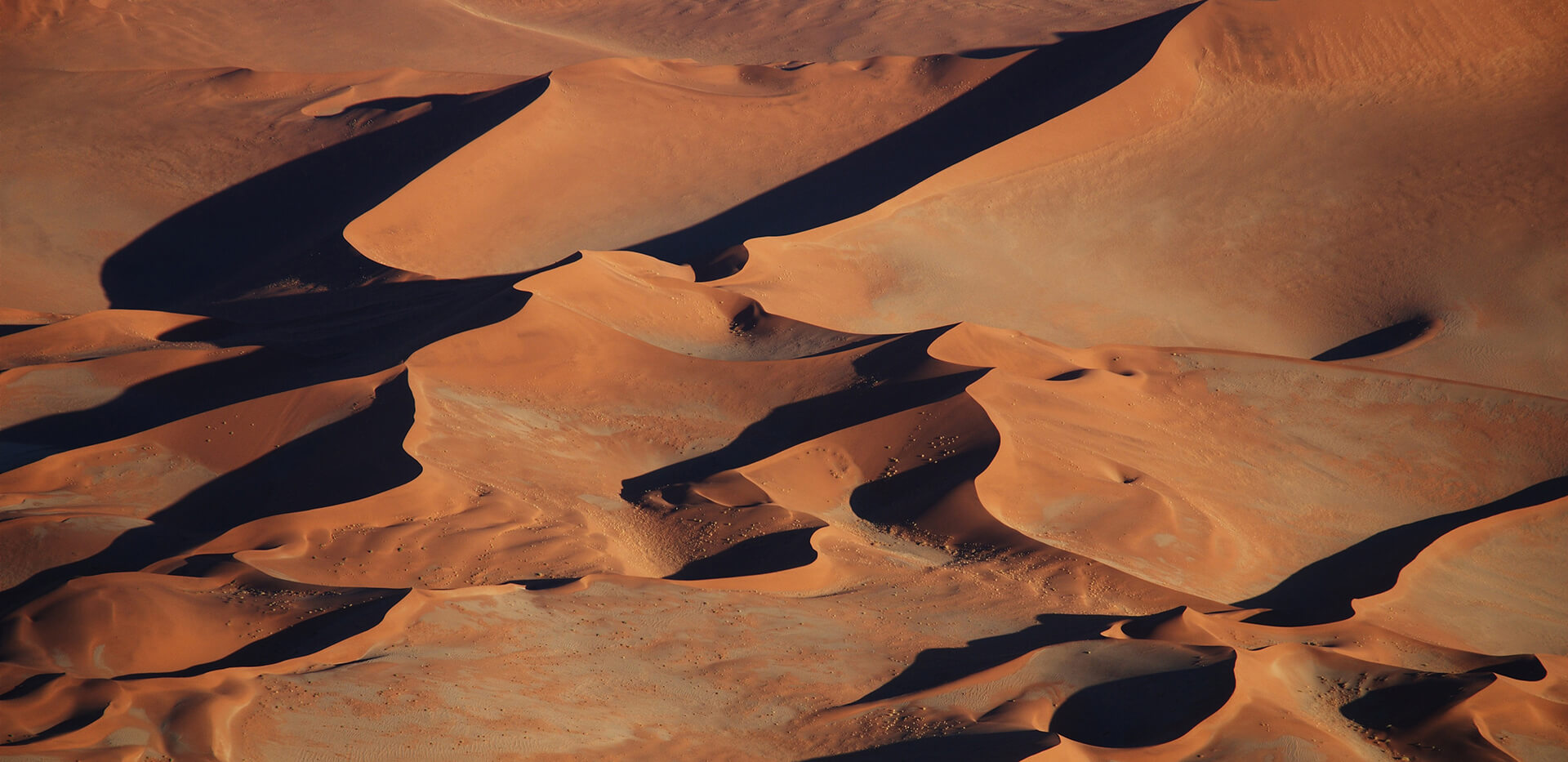
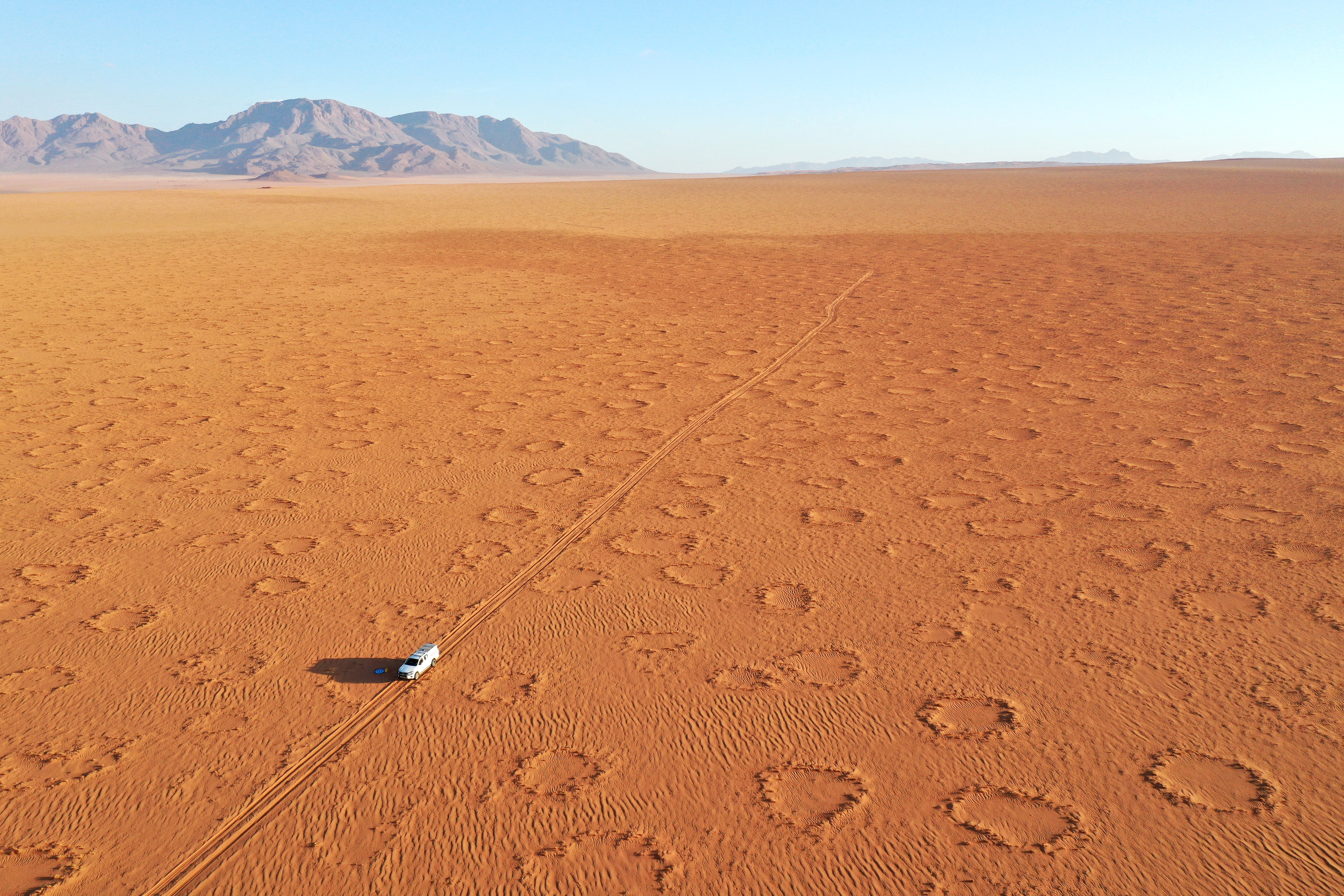
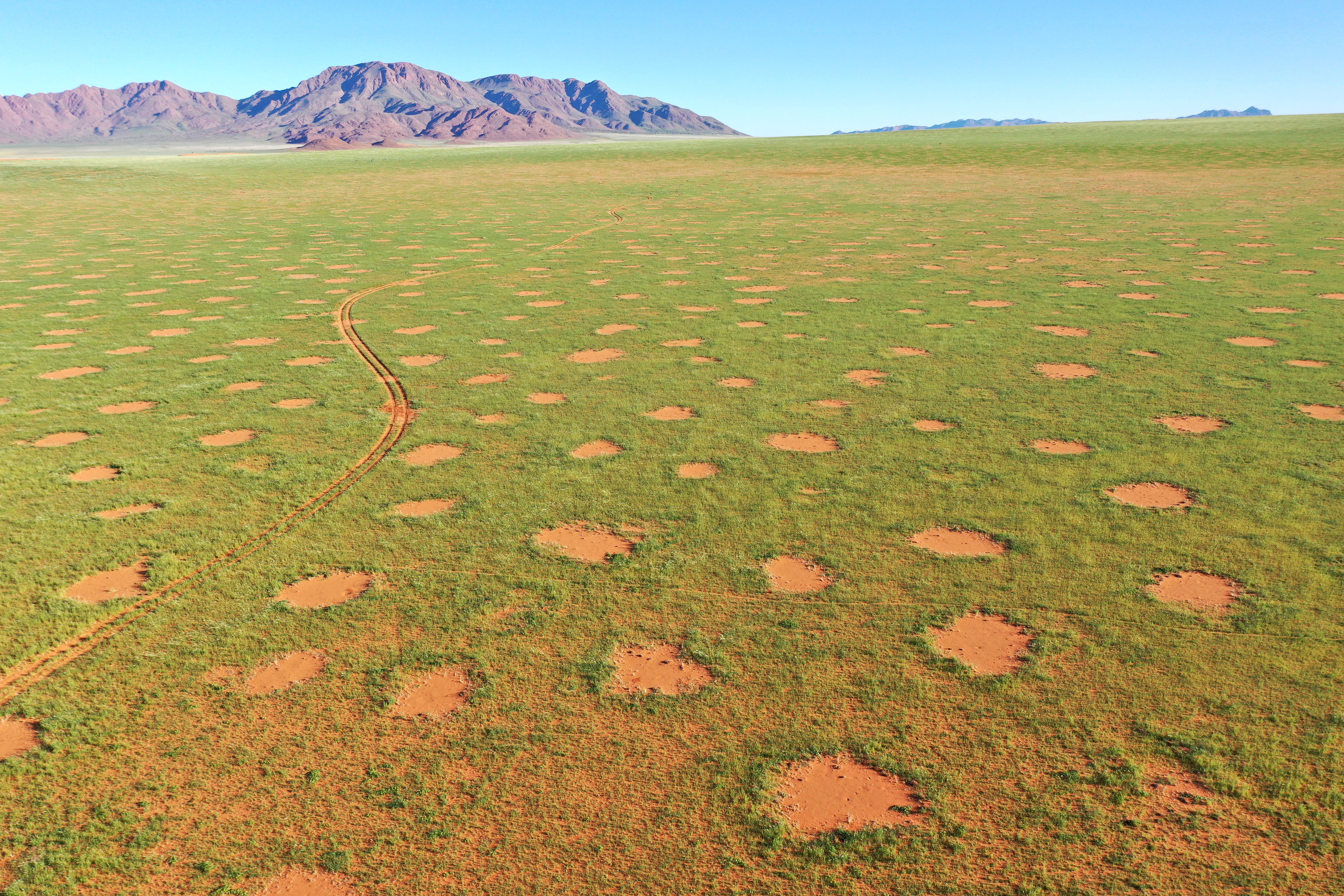
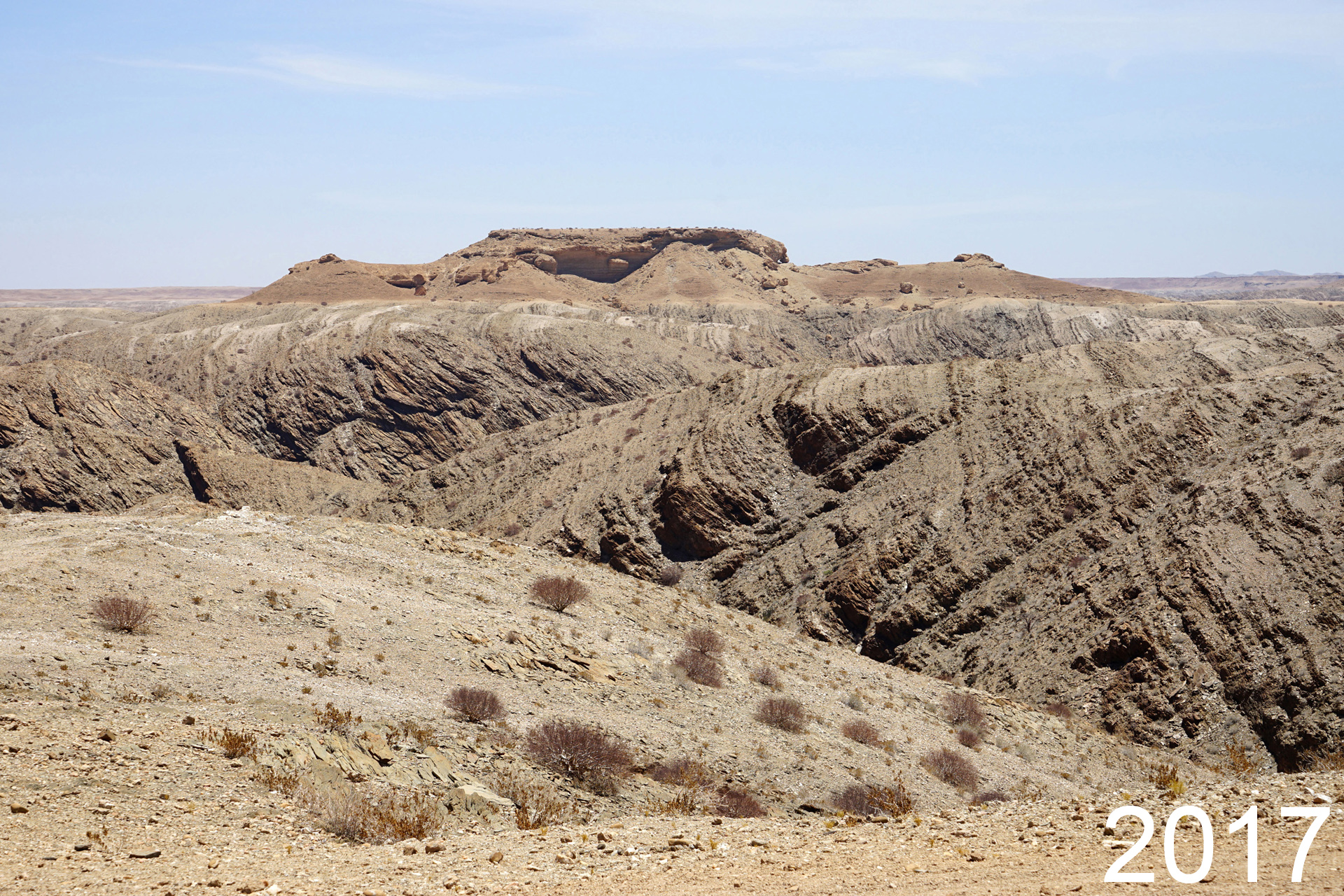
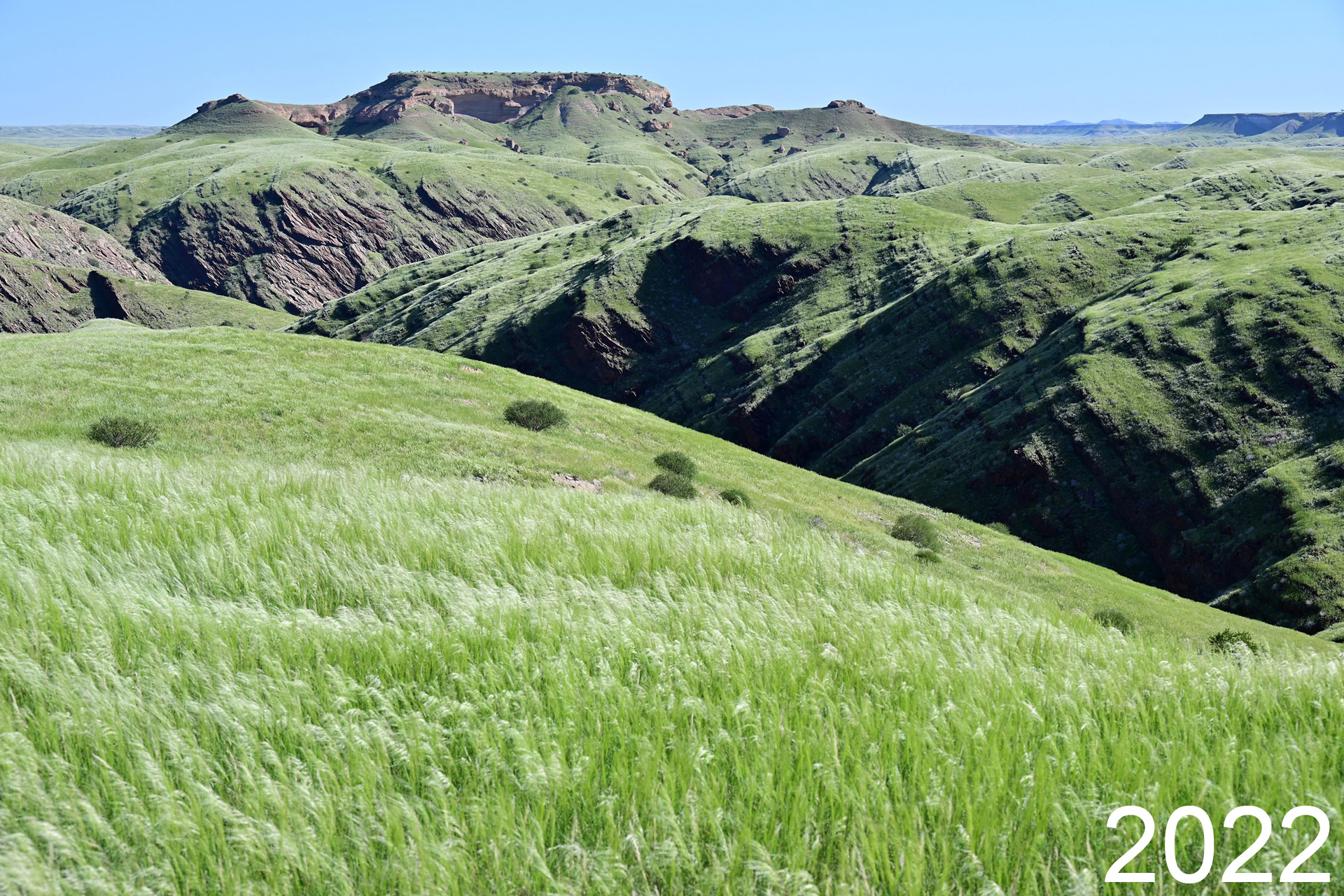
 For over 25 years, I have been intensively involved with savannas and the ecology of the Namib Desert – one of the oldest and most sensitive desert landscapes on Earth. A particular focus of my work is on fairy circles, a natural phenomenon that exemplifies how complex and finely balanced the processes in this habitat are. My exploration of this topic has led to numerous scientific publications and broader public awareness. The research findings have been reported in American, Namibian and German media, among others.
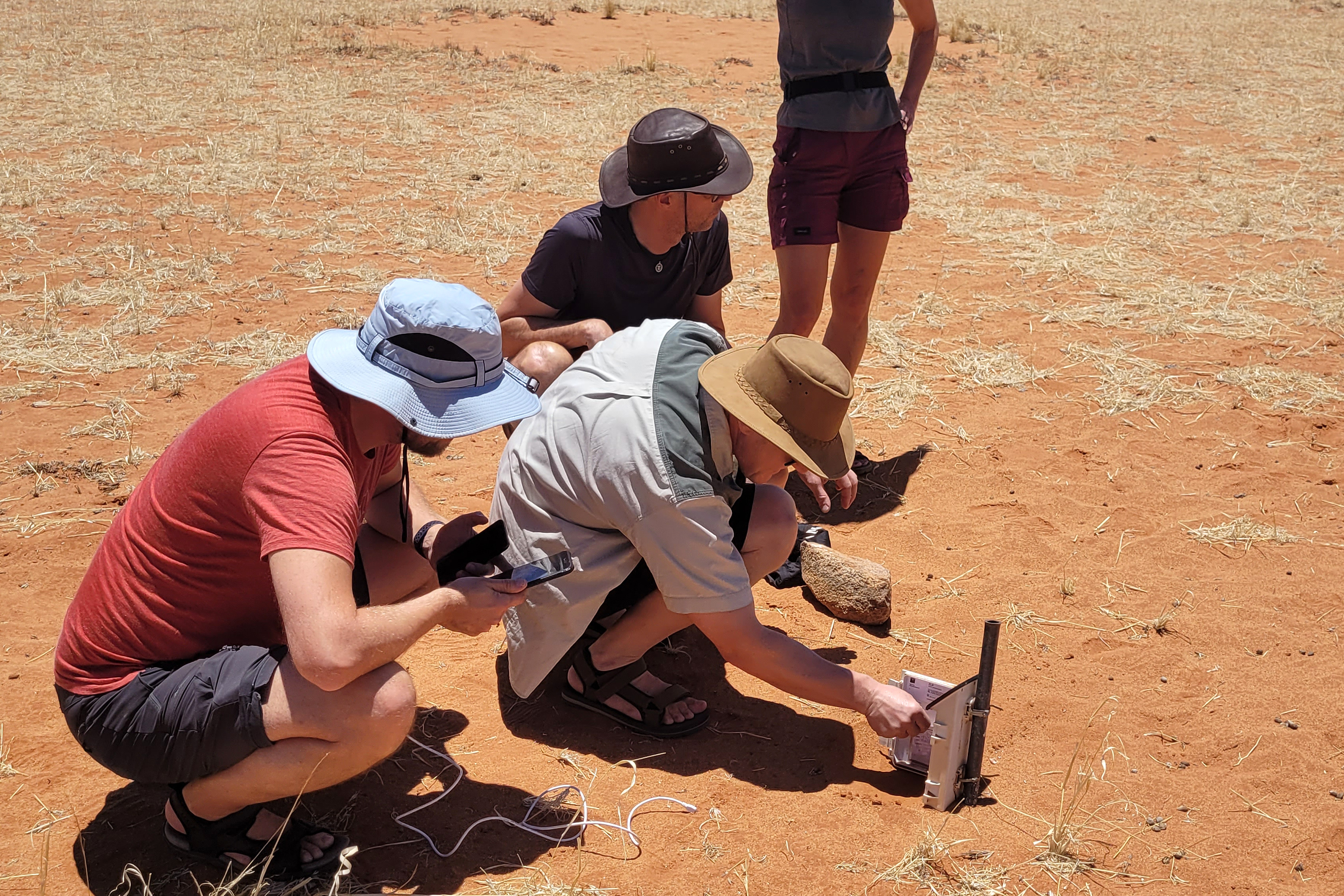
Years of research have led to a new insight: plants are much more “intelligent” than previously thought. They possess a swarm intelligence that allows them to actively redistribute scarce resources such as soil water to their advantage. This self-organization helps plants survive extreme drought. That is why the Namib is home not only to fairy circles, but also to many other plant species that form circular rings and other patterns. I have compiled details of these research findings on the website www.fairy-circles.info.
For over 25 years, I have been intensively involved with savannas and the ecology of the Namib Desert – one of the oldest and most sensitive desert landscapes on Earth. A particular focus of my work is on fairy circles, a natural phenomenon that exemplifies how complex and finely balanced the processes in this habitat are. My exploration of this topic has led to numerous scientific publications and broader public awareness. The research findings have been reported in American, Namibian and German media, among others.
Years of research have led to a new insight: plants are much more “intelligent” than previously thought. They possess a swarm intelligence that allows them to actively redistribute scarce resources such as soil water to their advantage. This self-organization helps plants survive extreme drought. That is why the Namib is home not only to fairy circles, but also to many other plant species that form circular rings and other patterns. I have compiled details of these research findings on the website www.fairy-circles.info.
Conveying knowledge in an understandable way
It is always important to me to convey scientific findings in an understandable and contextualized way. This aspiration also gave rise to the sections “Fairy Circles” and “Did You Know...?” on this website. There, I address questions and observations that many travelers ask themselves when they consciously experience Namibia: Why does something grow here – and not there? How does life adapt to extreme conditions? And what do landscapes tell us when we take a closer look?
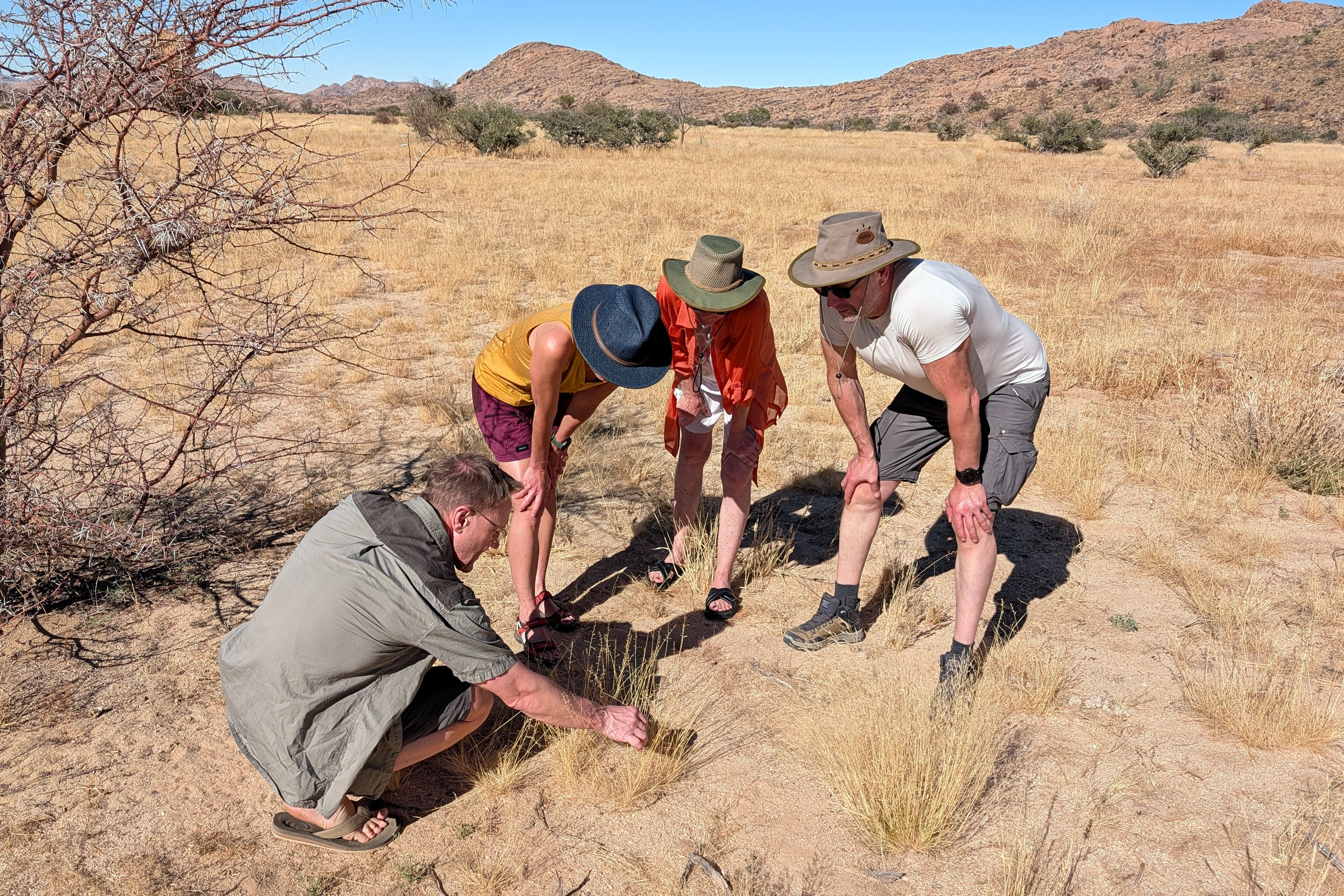 This attitude also shapes my tours. My specially designed Research-Tour is not about seeing as many of the country's famous highlights as possible, but about recognizing connections. We take our time, observe, ask questions, and contextualize what we see – always with respect for nature, culture, and people. Many places only reveal their significance once you understand how they came into being and what role they play in the larger ecological structure.
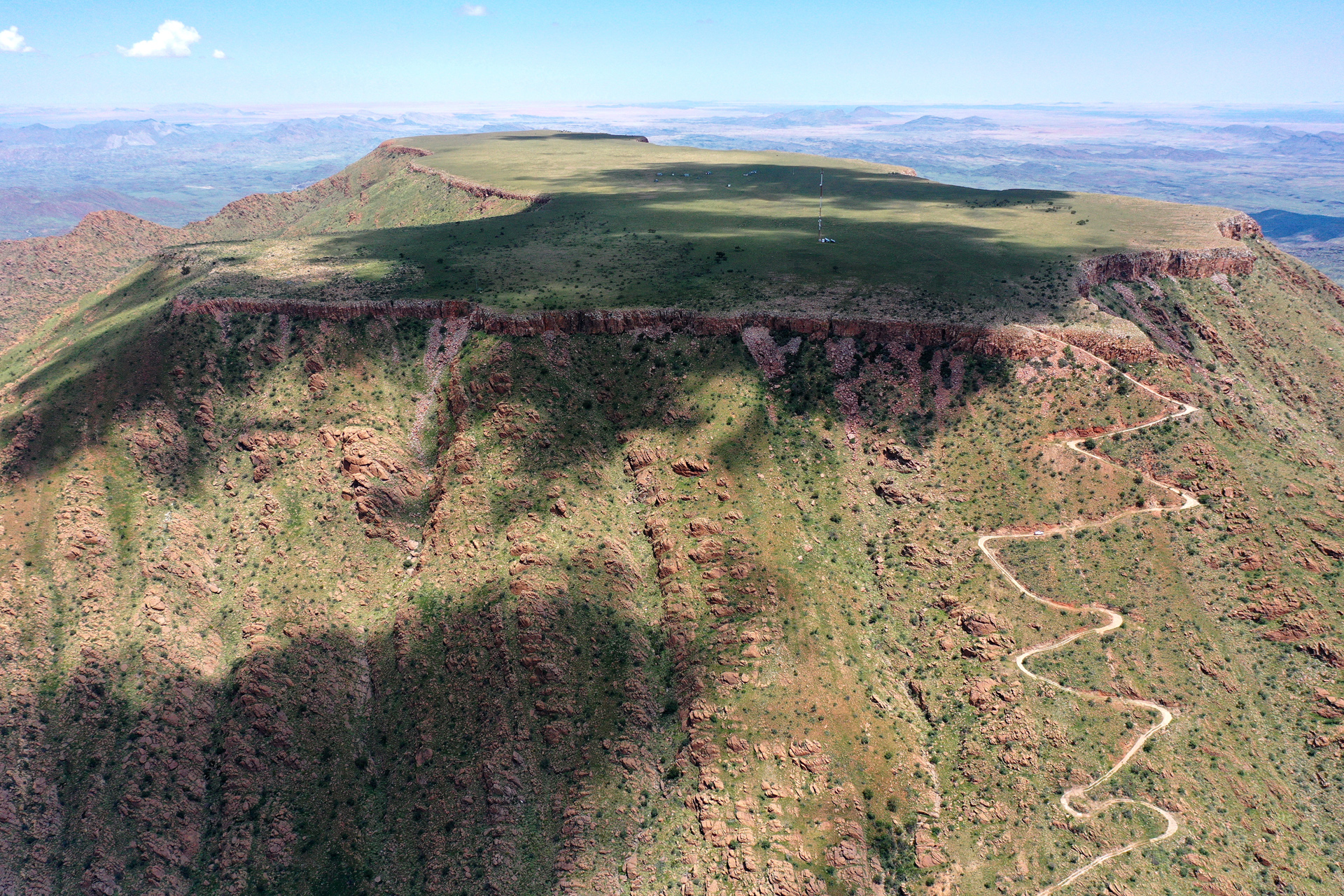
Thanks to my many research trips, I can provide you with the relevant insights here, as I have been able to explore virtually every remote region of Namibia thanks to special permits. This includes trips to the Gamsberg Plateau, the Sperrgebiet, the Tsondab Vlei, and other areas of the Namib-Naukluft National Park that are not officially accessible. Regardless of this, my tour offerings are aimed at anyone who appreciates nature experiences and adventure – as well as people interested in topics such as photography or culture.
This attitude also shapes my tours. My specially designed Research-Tour is not about seeing as many of the country's famous highlights as possible, but about recognizing connections. We take our time, observe, ask questions, and contextualize what we see – always with respect for nature, culture, and people. Many places only reveal their significance once you understand how they came into being and what role they play in the larger ecological structure.
Thanks to my many research trips, I can provide you with the relevant insights here, as I have been able to explore virtually every remote region of Namibia thanks to special permits. This includes trips to the Gamsberg Plateau, the Sperrgebiet, the Tsondab Vlei, and other areas of the Namib-Naukluft National Park that are not officially accessible. Regardless of this, my tour offerings are aimed at anyone who appreciates nature experiences and adventure – as well as people interested in topics such as photography or culture.
Knowledge transfer to tour guides
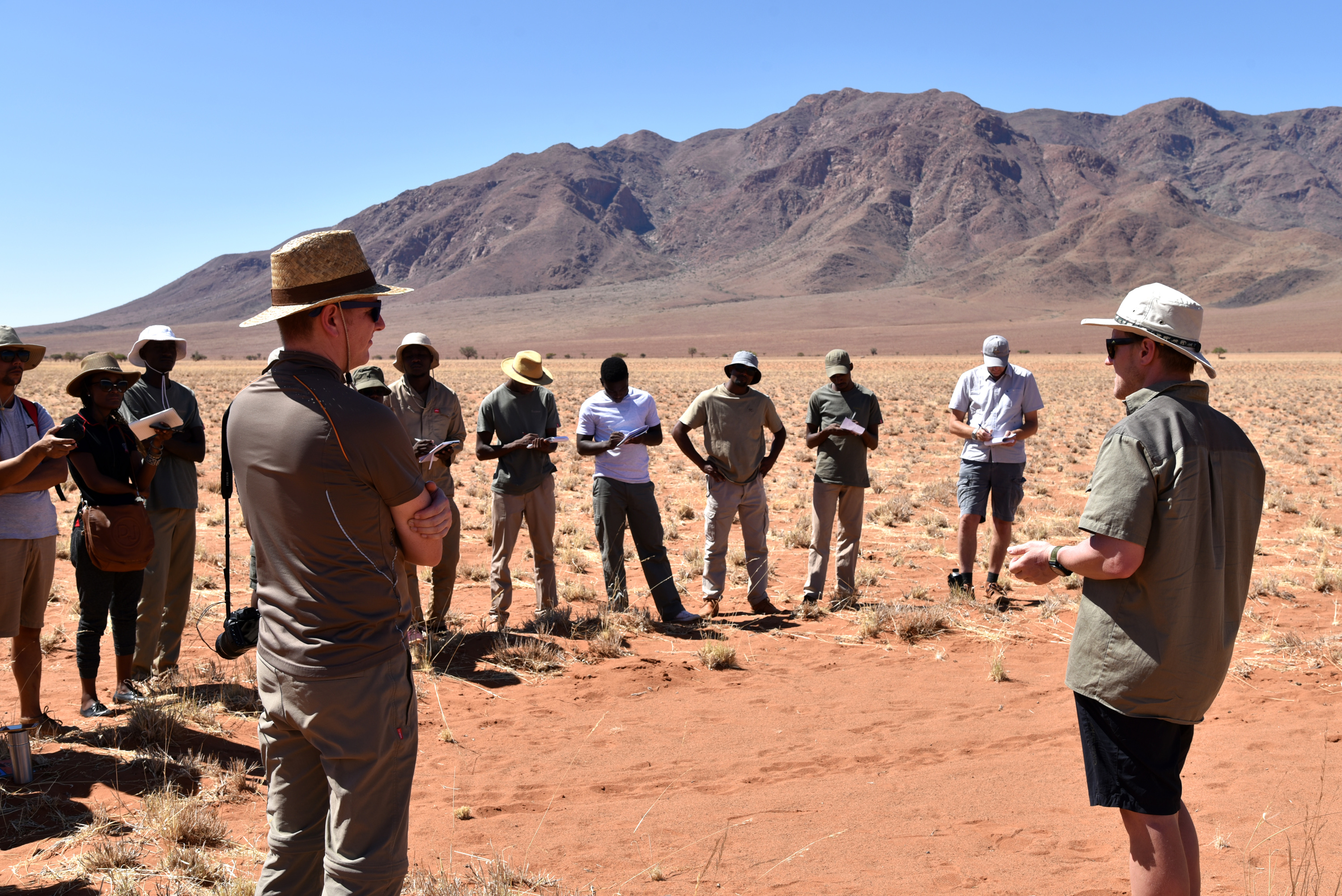
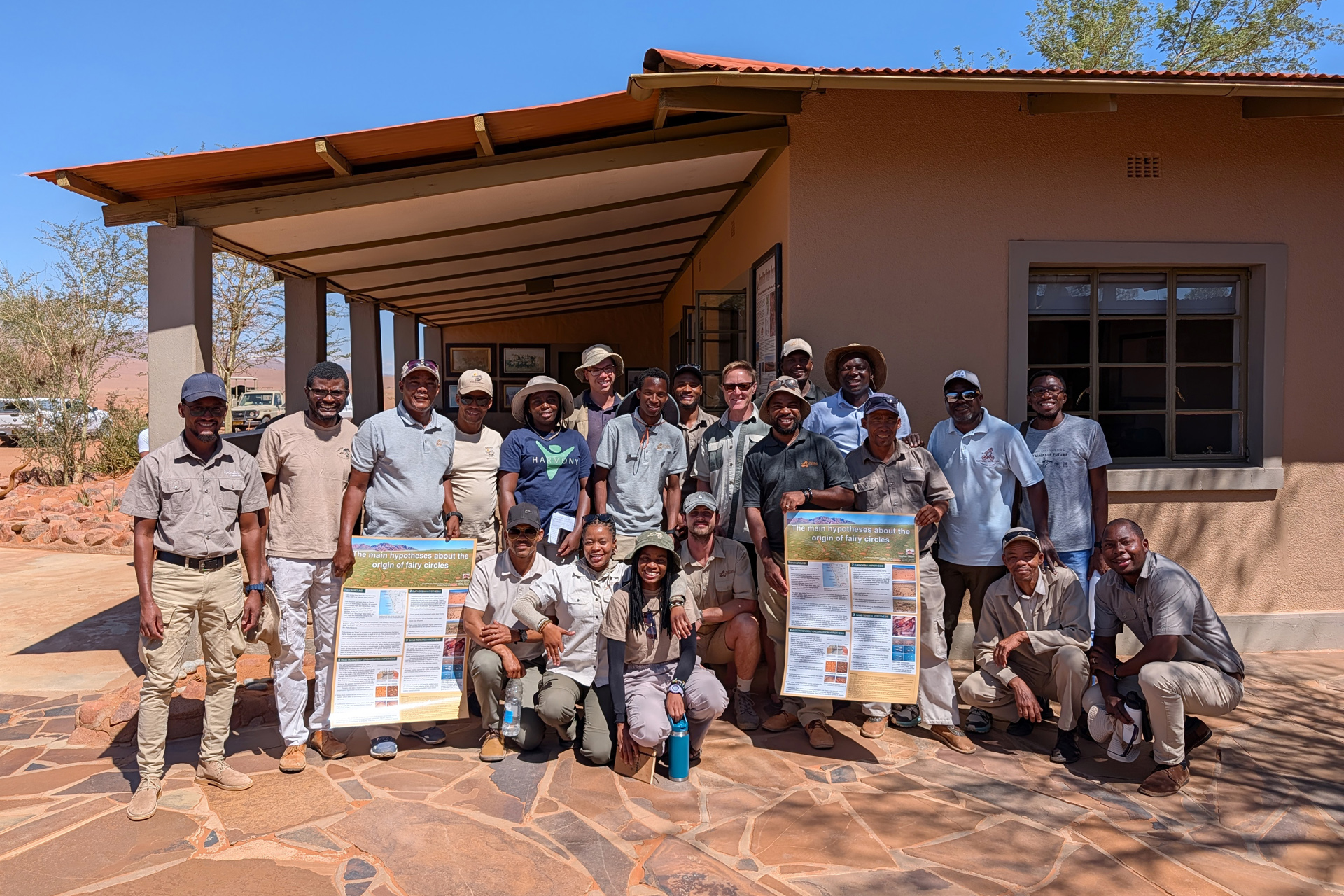 In addition to my work as a researcher, since 2019 I have also been committed to passing on specialist knowledge to Namibian tour guides. After all, the tour guides from the various companies and lodges are the ones who have the closest contact with national and international tourists. In November 2025, more than 20 tour guides gathered at Wolwedans in the NamibRand Nature Reserve to attend my full-day workshop “Fairy Circles and Plant Adaptations to Water Stress in the Namib”.
Today, I see my role as helping guests get to know Namibia as I have come to know it myself: multifaceted, quiet, sometimes contradictory, but always impressive. Those who travel with me should not only see, but also understand – and gain insights that go beyond what can be found in traditional travel guides.
In addition to my work as a researcher, since 2019 I have also been committed to passing on specialist knowledge to Namibian tour guides. After all, the tour guides from the various companies and lodges are the ones who have the closest contact with national and international tourists. In November 2025, more than 20 tour guides gathered at Wolwedans in the NamibRand Nature Reserve to attend my full-day workshop “Fairy Circles and Plant Adaptations to Water Stress in the Namib”.
Today, I see my role as helping guests get to know Namibia as I have come to know it myself: multifaceted, quiet, sometimes contradictory, but always impressive. Those who travel with me should not only see, but also understand – and gain insights that go beyond what can be found in traditional travel guides.
A review in pictures

Experience exclusively:
– the ancient Namib Desert
– Namibia's unique ecology
– the mysterious fairy circles
– the wild Damaraland and Etosha
– scientific information on Namibia’s nature
– great accommodation and food

