
FAQs | Namibia
Frequently asked questions
Here are the most frequently asked questions about a round trip through Namibia.
-
How does the binding booking process work at NAMIBIA-ECO-TOURS?
-
We offer a relaxed approach to this, as we want you to take your time to choose your trip and make a binding booking. The booking terms and conditions are described in more detail in the General Terms and Conditions. You can find excerpts from these here:
The offer on our website www.namibia-eco-tours.com is not binding and is for your general information and orientation only. With your booking enquiry or general contact, there is no binding offer to conclude a travel contract. Your booking inquiry for the round trip is merely a non-binding request to us to provide you with a legally binding individual travel offer. The binding offer from our side will be sent by e-mail. It contains, among other things, information on the exact date of travel, the price and the services included. With your written acceptance of this offer by e-mail-confirmation to NAMIBIA-ECO-TOURS, the binding conclusion of the contract for both parties is concluded. Once the travel contract has been concluded through your written acceptance, the registrant will receive written confirmation from NAMIBIA-ECO-TOURS as well as the travel security certificate by e-mail. Upon receipt of the travel security certificate and conclusion of the contract, a deposit of 40% of the tour price is to be transferred. After conclusion of the contract, the deposit is to be paid within 14 days.
-
What about flights and the start and end of the trip?
-
With NAMIBIA-ECO-TOURS, the trip starts and ends in Windhoek. International guests are free to choose their flight to Windhoek. Transfers between the airport and Windhoek are covered by NAMIBIA-ECO-TOURS.
-
How does the visa work?
-
Since April 2025, German citizens and most other nationalities will need a tourist visa. You must have a passport that is valid for at least 6 months from the date of entry and has at least 3 blank pages. You can apply for the visa online from home or in person upon arrival in Namibia. The online application is submitted via the platform https://eservices.mhaiss.gov.na/register
When applying, you must select “Visa on Arrival” (not “Holiday Visa”). To complete the application, you’ll need to upload a scan of your passport, a passport photo, and your flight ticket details. You’ll then be automatically redirected to the payment process (cost: approximately 80 Euros), after which you’ll immediately receive the visa via email. The visa issued online must be printed out and brought with you upon entry. It will be signed only at customs in Windhoek. Additionally, you’ll need a confirmation of health or travel insurance issued in English and your rough itinerary, which can be found on the invoice or the NAMIBIA-ECO-TOURS website. It is somewhat easier to apply for the visa manually upon arrival. To do this, fill out the Visa-on-Arrival form, which is provided either by the airline or in the airport arrival hall. Then submit the same documents as listed above at the counter and pay for the visa with a credit or debit card, after which the visa will be issued to you.
-
Do I need any special medical precautions for traveling to Namibia?
-
As a dry desert country, Namibia has hardly any pathogens known from other tropical countries in the regions we offer tours to. For this reason, you can drink the water from the tap. Special medical prophylaxis is therefore not necessary. Only the usual travel vaccinations against hepatitis A are recommended – depending on your needs, additional vaccinations against hepatitis B, rabies, or typhoid may be advisable.
-
Why does NAMIBIA-ECO-TOURS mainly offer trips during the off-season from late October to late April?
-
Due to the switch to winter time in Europe and the correspondingly cold, gray, and short days, a “winter escape” to the southern hemisphere is particularly appealing during this period. The weather in Namibia is then pleasantly warm, especially in the evening and at night, when you can enjoy your dinner under the starry sky. From May onwards, it can get quite cold in Namibia in the evenings and the days are getting shorter in the desert country – so you get less out of each day of your trip. From June until August, there are also nights with frost in Namibia. There are two further advantages from the end of October to the end of April: there are fewer tourists in Namibia and you can enjoy the benefits of this extremely sparsely populated country even more. In addition, the rainy season from February to March offers the chance to see the desert suddenly turn green, which is a very special experience.
-
What is the rainy season like in Namibia, and how often and for how long does it rain?
-
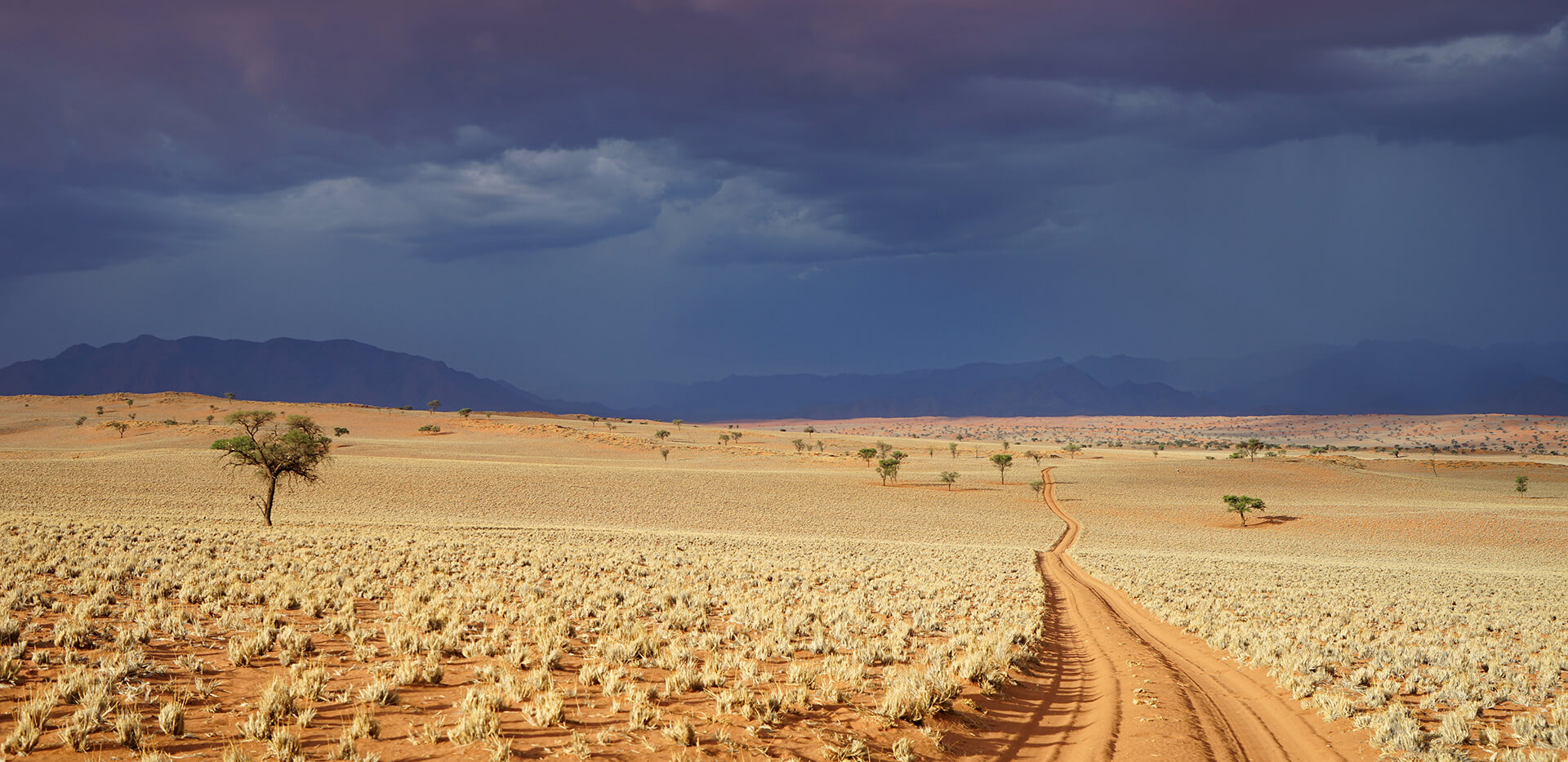
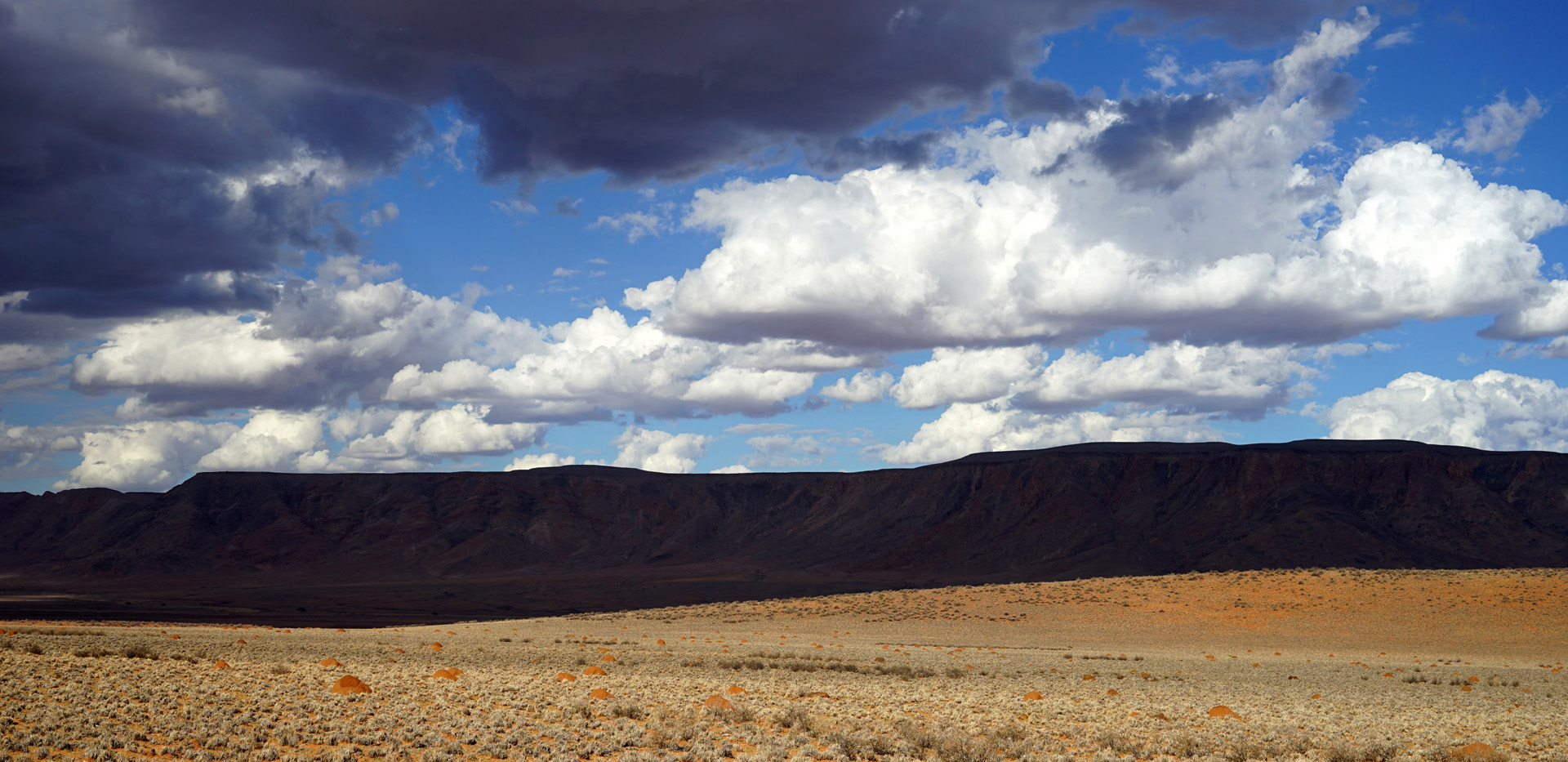
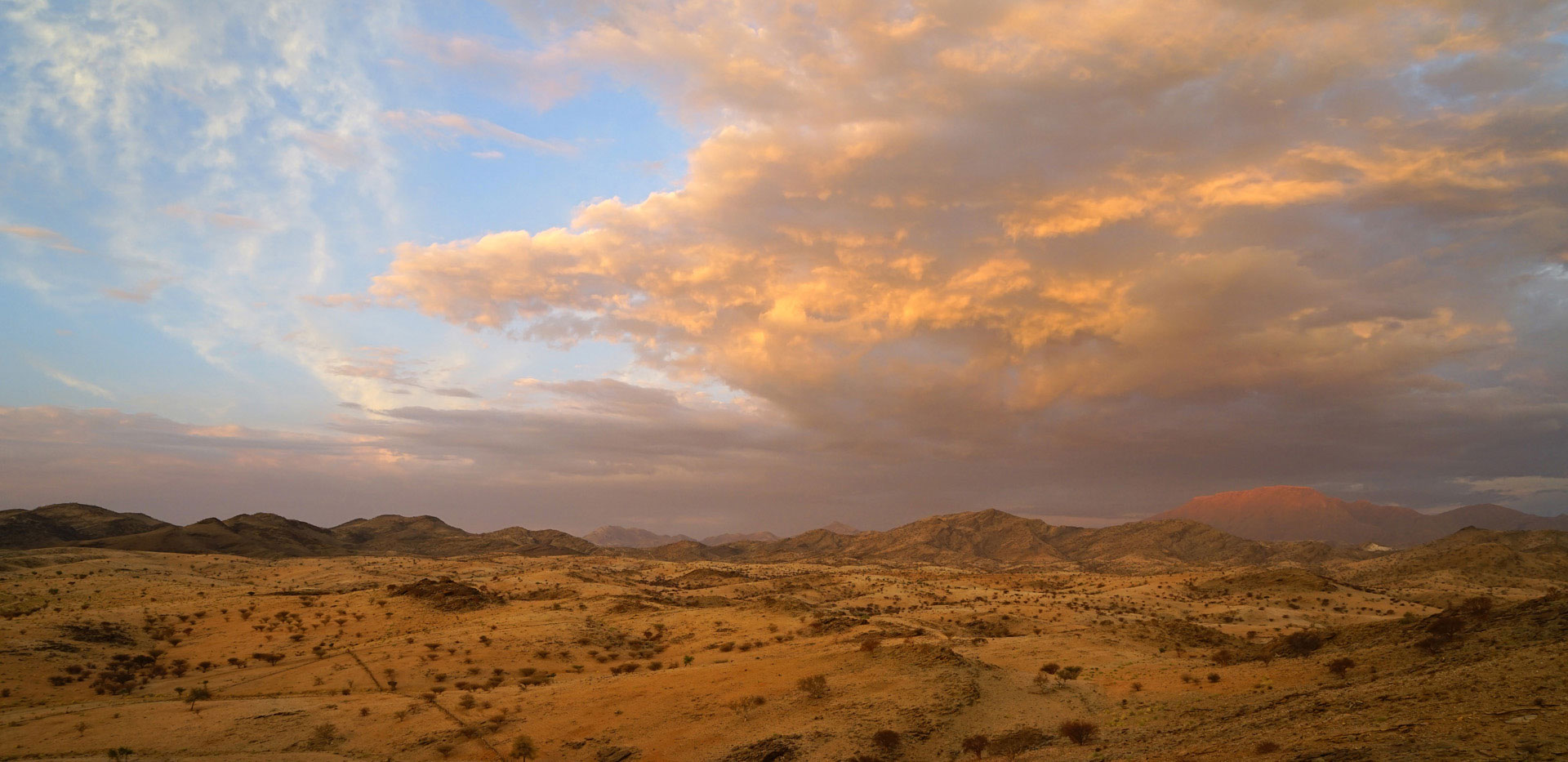
Namibia is a desert country, and there is no guarantee of rain – not even when traveling along the Namib in February or March. However, if it does rain during a two-week round trip, it is usually only on isolated days, and the rain lasts only a few minutes or hours per day. This does not affect the quality of the trip. Photo opportunities can even become more attractive, as a sky dotted with clouds looks more beautiful than a monotonous blue sky. The rainfall can cause rivers to swell, making certain routes impassable for a short time. However, this affects more the routes of the Arid-Eden-Tour offered here in the remote northwest of the country. Further inland and in the south, the main rivers at road crossings are paved, so they are passable depending on the water level. In any case, you can rely on my local knowledge as a guide and my extensive experience with traveling in the rainy season.
-
How warm or hot does it get in Namibia?
-
The heat in Namibia is very pleasant between the end of October and the end of April, as the humidity is only around 20 to 30%. Unlike in places near the equator, you don't sweat as much. Temperatures of 30° to 35°C therefore feel comfortable. The evenings are particularly pleasant, when the temperature cools down to 25°C or less and a gentle breeze blows. Between 11 a.m. and 4 p.m., it can sometimes get hot, with temperatures ranging between 35° and 40°C. However, this is the time when you are traveling from one place to the next in an air-conditioned Land Cruiser and can look forward to the pool at the next lodge. NAMIBIA-ECO-TOURS avoids offering tours during the hottest season from mid-December to early February.
-
What clothing do you need, and is there a dress code for certain occasions or accommodations?
-
There is no dress code. The lodges are accustomed to casual safari clothing. However, you can also dress up for dinner at selected lodges. A hat to protect against the sun is highly recommended. We can also buy these in Windhoek before the trip begins. The most practical everyday clothing consists of a short T-shirt or shirt, shorts, and sandals or flip-flops. Functional fabrics, familiar from the world of sports, are particularly suitable. These are airy and can also be washed quickly in between uses. Otherwise, laundry facilities are available in hotels – for example, halfway through a two-night stay in Swakopmund. On the coast, such as in Swakopmund or Lüderitz, it can get cooler and windier in the evenings. It is best to wear the clothes you wore on your way to the airport at home. The “onion principle” is ideal here, as you don't need a winter jacket on the Namibian coast. A windbreaker or fleece jacket is sufficient to protect you from cooler or windy conditions.
-
What are the accommodations like on the tours?
-
With the exception of the (Camping-) Arid-Eden-Tour, NAMIBIA-ECO-TOURS primarily offers comfortable lodges and hotels with beautiful rooms, a pool, and excellent food. To add a touch of adventure and bring guests closer to African nature, some of the accommodations also include permanent tents, which are particularly popular with guests due to their unique charm.
-
Is there Wi-Fi in the accommodations?
-
Wi-Fi is usually available free of charge at all lodges.
-
Is the water drinkable in Namibia?
-
Yes, in Namibia you can safely drink tap water in most places where our tours take place. In cities, however, it is often quite chlorinated. In the lodges, the tap water is generally very good because it comes from deep boreholes and has been filtered by thick layers of sand.
-
How long do you spend in the car when traveling in Namibia?
-
Namibia is more than twice the size of Germany, so the distances between tourist attractions can be quite long. That's why NAMIBIA-ECO-TOURS does not offer any tours shorter than two weeks, because we want you to experience the country at your own pace and without overly long stages. Each of the lodge tours therefore includes three to four double overnight stays, so that you spend two nights in a row in the same place. Typical connecting stages take around three hours of pure driving time. In some cases, the driving time is only one to two hours. The longest arrival and departure stages on the tours are five to six hours long, but they usually occur only once per tour.
-
How do you pay in Namibia?
-
You can pay with credit cards in most places and also withdraw cash. EC cards also work in some cases. It is best to withdraw cash, i.e. Namibia-Dollars, in Windhoek at one of the many ATMs. There are two currencies in circulation in Namibia: the Namibia-Dollar and the South African Rand. Both currencies have the same value and are accepted when shopping.
-
Is Namibia a safe country to travel to?
-
Yes, Namibia is considered a very safe country to travel to. In large cities such as Windhoek, you should of course always be more vigilant than in small settlements. But this applies worldwide. Outside the capital, Namibia is very safe.
-
Are there dangerous animals such as snakes or scorpions?
-
Snakes and scorpions do exist in Namibia, but they are rarely seen. Most snakes flee on their own because they sense the vibrations in the ground caused by footsteps. Scorpions hide under rocks and in other shady places during the day. After dark, it is advisable to use a headlamp or flashlight on the way from dinner to your accommodation. If you do see a scorpion, it is not dangerous, as scorpions go about their own business. Most guests are fascinated when they see a scorpion on their trip.
-
What packing list does NAMIBIA-ECO-TOURS recommend?
-
Clothing
- Low shoes
- Sandals
- Flip-flops (most comfortable when it's really warm)
- Shorts & long pants
- T-shirts (functional clothing is most comfortable)
- Sun hat that covers the ears
- Light-colored long-sleeved shirt with collar (in case you get sunburned)
- Jacket (fleece, preferably windbreaker)
- Swimwear
Technology
- Plug adapter for Namibia type D (or M)
- Cell phone & camera, memory cards, batteries
- Charging cables for cell phone and camera
- Binoculars
- Headlamp or flashlight
- Pocket knife or multi-tool
Other
- Flight tickets
- Passport
- ID card, driver's license
- Cash cards
- International health insurance
- Sunglasses
- Dustproof bags with roll-top closures for sensitive technology (sand blows on the dunes)
- Small backpack
- Small first-aid kit (cream for hands and lips, because the air is very dry)
Welcome to NAMIBIA-ECO-TOURS – your specialist for privately guided individual tours through Namibia. On our exclusive tour, you will benefit from my 25 years of experience as a desert researcher and ecologist in the Namib.

